Phone and desktop versions of michaelstevenson.info
differ according to their navigational system
this one’s a list—–the other’s a journey
In a 1964 article, Thomas Gladwin compares the navigation methods of the Chuukese & Europeans at sea. Europeans follow a predetermined plan based on universal principles, adjusting as needed to stay 'on course.' Chuukese, on the other hand, start with an objective & navigate ad hoc using the wind, stars, & waves. They can point to their destination at any time but cannot describe their course (Gerald Berreman, 1966).
an AI abridged version of the preface from - Plans and Situated Action:
The problem of human-machine communication Lucy Suchman 1985
2024

inc.
laser-engraved fabric & the peaceable kingdom
—the 3 charities read a post-dated
letter from their possible future selves…
Fine Arts, Sydney 2024
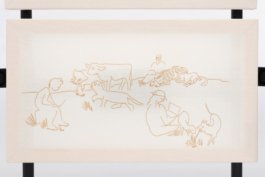
inc.
laser-engraved fabric & a stress-test,
(an aside)
—charity's forsaken cat…
Fine Arts, Sydney 2024
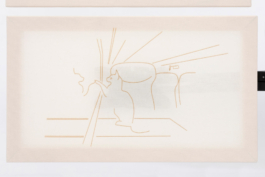
charity leans in—
inc. laser-engraved fabric & the
counter-factual apologetics of
Earning-2-Give…
Fine Arts, Sydney 2024
Michael Lett Gallery, Auckland 2023
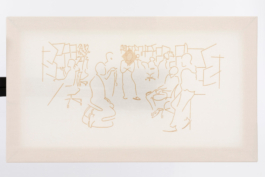
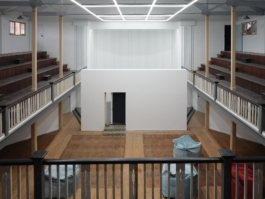
inc.
1 m3 of yielding soft-furnishings & the words
of a now defunct charity website
—everyone’s welfare matters…
Fine Arts, Sydney 2024
Michael Lett Gallery, Auckland 2023
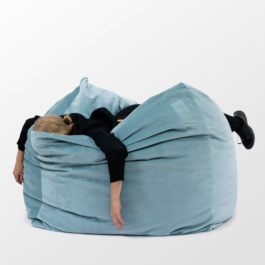
inc.
1 m3 of yielding soft-furnishings & the words
of a now defunct charity website
—our team & board members…
Fine Arts, Sydney 2024
Michael Lett Gallery, Auckland 2023

inc.
1 m3 of yielding soft-furnishings & the words
of a now defunct charity website
—our funding round is currently closed…
Fine Arts, Sydney 2024
Michael Lett Gallery, Auckland 2023
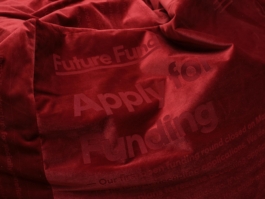
inc.
a 1 m3 yielding core & lining—
an aleatoric decision making matrix
for 6 outcomes…
Fine Arts, Sydney 2024
Michael Lett Gallery, Auckland 2023
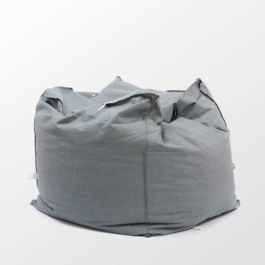
2023
inc.
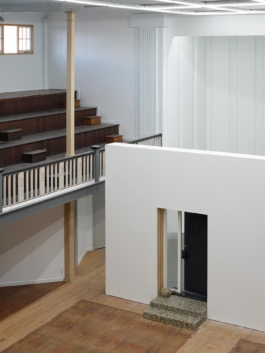
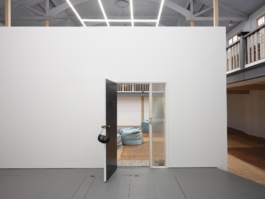
A door in a freestanding wall
with a moral imperative & post-modern
pretensions…
Michael Lett Gallery, Auckland 2023
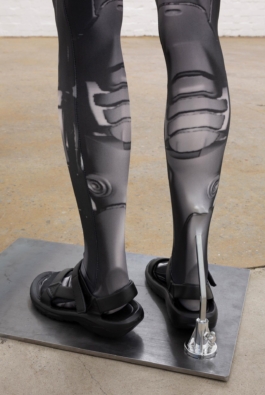
a walking billboard, posterchild, or charnel house
for the AI soul—inc. ½ a RoboCop morph suit,
Teva sandals, baby bibs, a bunk bed &
goodnight rug—will we eat baby food forever?
Fine Arts, Sydney 2022
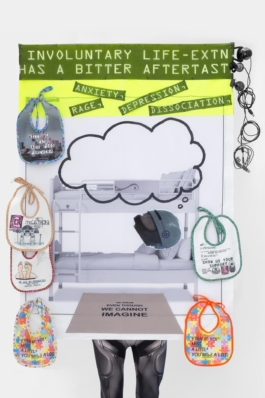
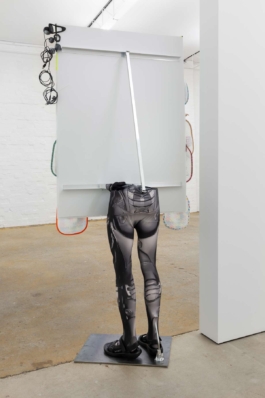
inc.
latex, net, webcam, biodegradable plastic bag
—effects for a fictional telethon with surprise
appearances & on-camera confessional…
Fine Arts, Sydney 2022
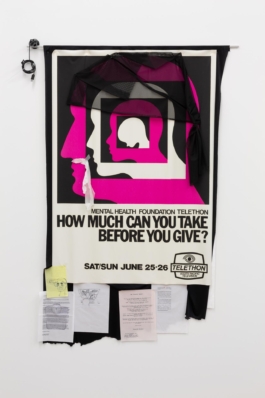
Disproof Does Not Equal Disbelief
(publication)
2021
a hardcover enclosing 2 documents
bound with a single rubber band,
upon opening they part ways—
cover, band, vol i: Cultural Dope
vol ii: Kayfabe Logic…
KW Institute for Contemporary Art, Berlin 2021
MUMA, Melbourne 2019
Sternberg Press Ltd, London
2021
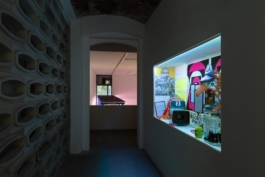
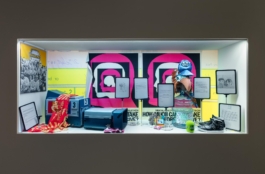
inc.
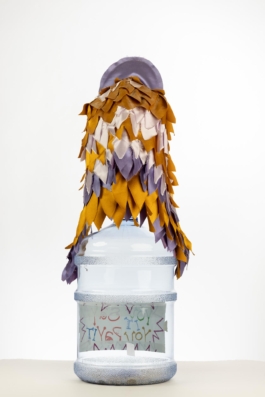
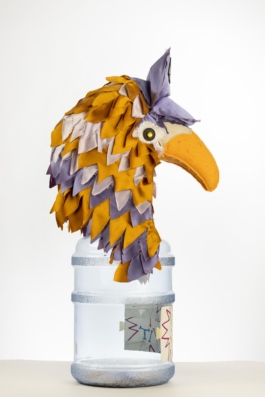
a pantomime bird head, coin feeder mechanism
& water bottle of generous capacity—
cos... you say it, you pay it!
Galleria Frederico Vavassori, Milan 2023
KW Institute for Contemporary Art, Berlin 2021
inc.
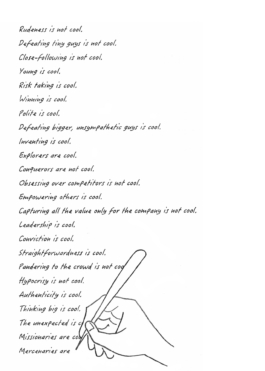
love or fear? Bezos & the missionary zeal
of Annie Vallatton composing
the Amazon.love list…
KW Institute for Contemporary Art, Berlin 2021
inc.
a collection of paintings & studies from 1987
oil on panel, ink on paper &
a structure from shrink wrap
encaptulated scaffold…
KW Institute for Contemporary Art, Berlin 2021
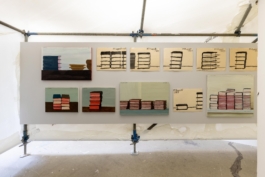
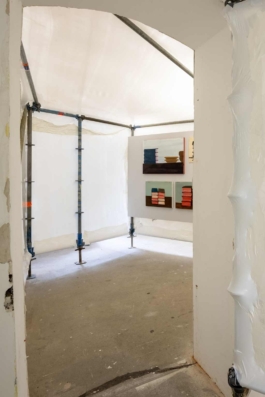
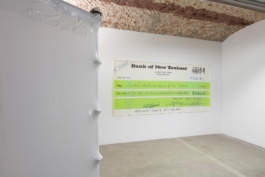
inc.
galvanised welded steel bike rack, locks,
& various species of inappropriate footwear…
KW Institute for Contemporary Art, Berlin 2021
Kunstinstituut Melly, Rotterdam 2020

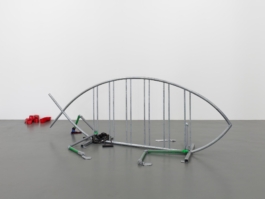
inc.
foldable Plexiglas shield, acoustic foam,
—lunar sample #15415 replica (Here I am,
Taketh Me)—electrolyte imbalance,
heart arrythmia, auditory verbal hallucination
—a cardboard ark, paws & hooves…
Museum Sztuki, Łódź 2021
Kunstinstituut Melly, Rotterdam 2020
Fine Arts, Sydney 2020
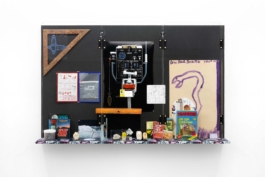
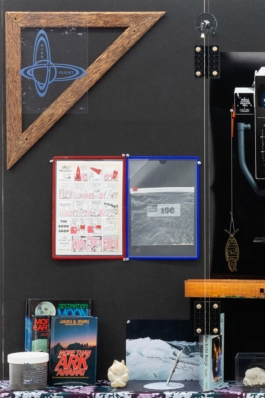
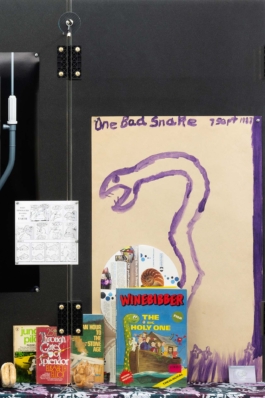
inc.
foldable Plexiglas shield, acoustic foam, cosplay
& a trial by jury backward-engineered—
Python Power bandana—oversized latex edition
—frozen in LN2 & wrestled on the floor…
Museum Sztuki, Łódź 2021
Kunstinstituut Melly, Rotterdam 2020
Fine Arts, Sydney 2020
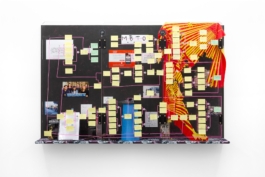
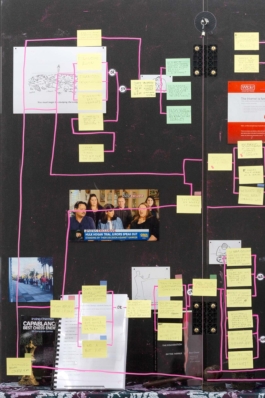
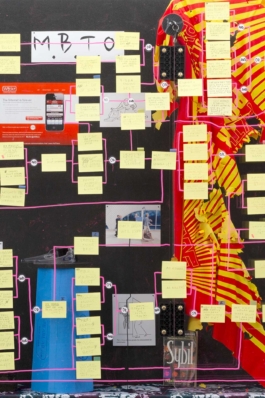
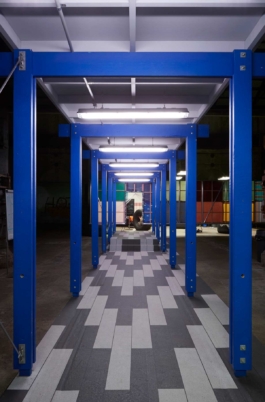
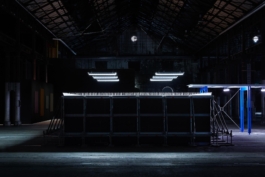
inc.
stretched, gridded airline blankets, scrap aircraft
tyres, finned aluminium heat sink, bird spikes—
a mini campus for 2 previously unrelated courses
connected via a walkway...
steirischerherbst, Graz 2023
KW Institute for Contemporary Art, Berlin 2021
MUMA, Melbourne 2019
Biennale of Sydney, Sydney 2018
Auckland Art Gallery Toi o Tāmaki, Auckland 2017
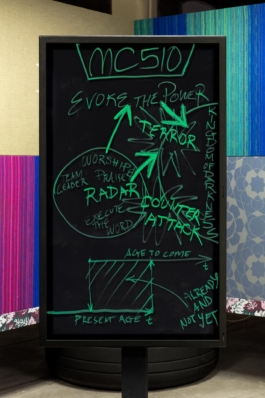
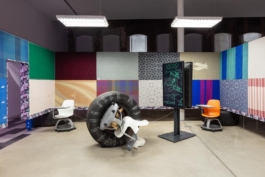
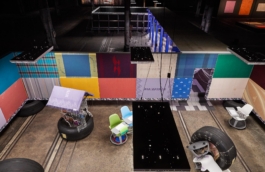
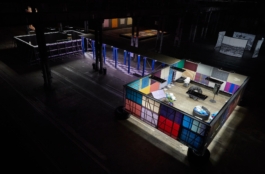
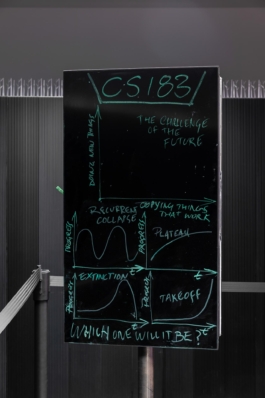
inc.
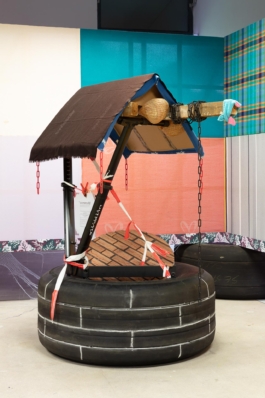
V-form keyboard stand, scrap commercial
aircraft tyre, airline blankets, rain chains—
a teaching aid for spirit mappers
& Jericho marchers …
steirischerherbst, Graz 2023
KW Institute for Contemporary Art, Berlin 2021
MUMA, Melbourne 2019
Biennale of Sydney, Sydney 2018
Auckland Art Gallery Toi o Tāmaki, Auckland 2017
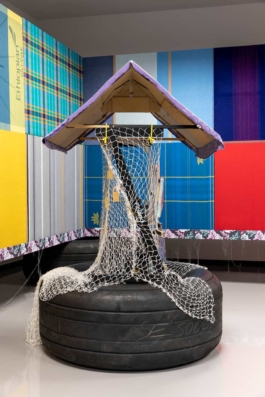
2017-
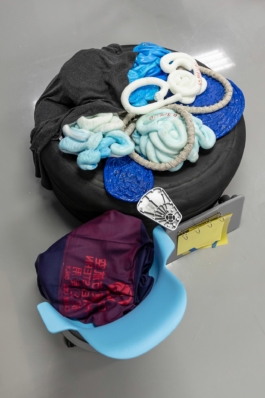
inc.
68kg solid plastic waste, bungee cord, scrap
commercial aircraft tyre, academic robe—
faith-healing & rudimentary physiology
just tell us where it hurts…
steirischerherbst, Graz 2023
KW Institute for Contemporary Art, Berlin 2021
MUMA, Melbourne 2019
Biennale of Sydney, Sydney 2018
Auckland Art Gallery Toi o Tāmaki, Auckland 2017
inc.
chalk marked scrap commercial aircraft tyre,
scholars chair, DSM III—Sybil Isabel
Dorsett’s 16 selves, dental floss & a plastic
whistle for attention…
steirischerherbst, Graz 2023
KW Institute for Contemporary Art, Berlin 2021
MUMA, Melbourne 2019
Biennale of Sydney, Sydney 2018
Auckland Art Gallery Toi o Tāmaki, Auckland 2017
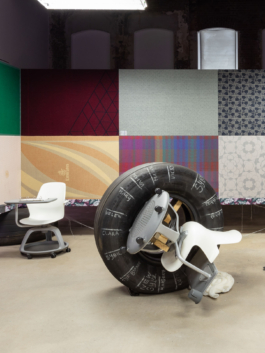
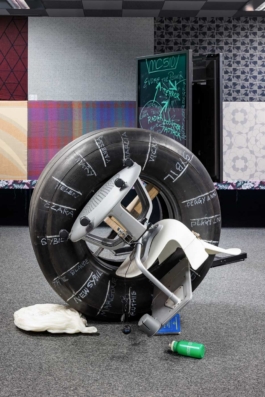
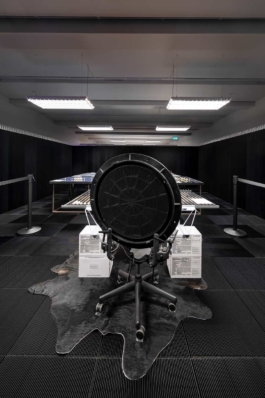
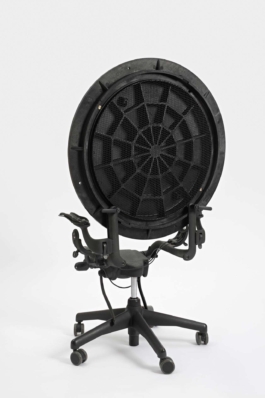
Aeron chair chassis upgrade—
enhanced imperial proportions
—full morphological freedom…
KW Institute for Contemporary Art, Berlin 2021
MUMA, Melbourne 2019
Biennale of Sydney, Sydney 2018
Auckland Art Gallery Toi o Tāmaki, Auckland 2017
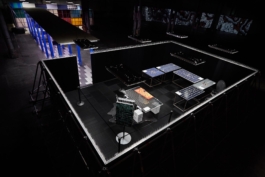
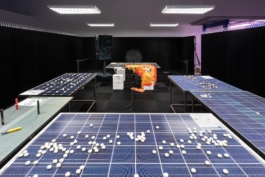
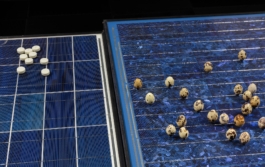
inc.
eggs, cigar cases, & tablets—placed with precision
on photovoltaic panels...
KW Institute for Contemporary Art, Berlin 2021
MUMA, Melbourne 2019
Biennale of Sydney, Sydney 2018
Auckland Art Gallery Toi o Tāmaki, Auckland 2017
2017-
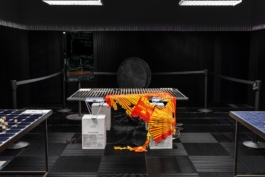
an object lesson—
inc. Solyndra solar cell, stacked Solyent
ready-to-drink meal replacement,
tattered bandana & sunglasses...
KW Institute for Contemporary Art, Berlin 2021
MUMA, Melbourne 2019
Biennale of Sydney, Sydney 2018
Auckland Art Gallery Toi o Tāmaki, Auckland 2017
near-miss events in congested skies (not
all of a material in nature)—inc. handset for an
unseen drone, magnetic tape, stacked wooden
aircraft wheel chocks & marshalling wands…
Art Basel, Basel 2016
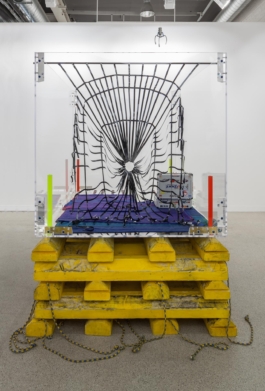
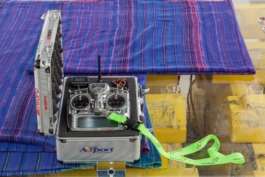
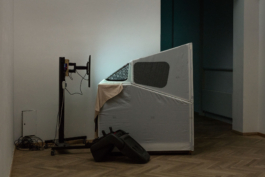
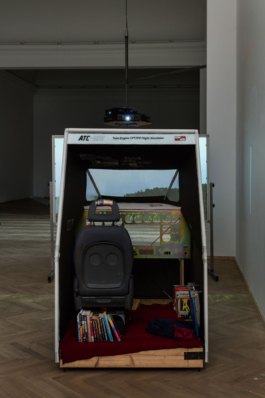
inc.
FAA approved fabric covering, airline blankets,
zinc chromate conversion coating on steel,
books, prayer cards, video projection...
Carl Freedman Gallery, London 2016
Midway Contemporary Art, Minneapolis 2016
Kunsthal Charlottenborg, Copenhagen 2015
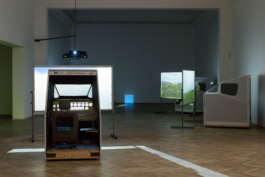
inc
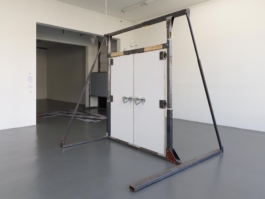
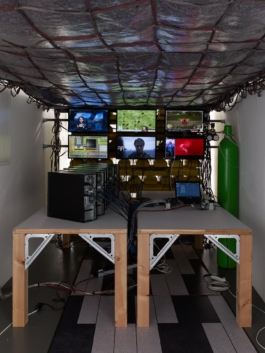
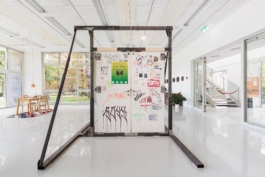
doors set in adjustable steel frames,
competing gaming bots—
the hiss of compressed-air lines releasing…
steirischerherbst, Graz 2023
KW Institute for Contemporary Art, Berlin 2021
Kunstinstituut Melly, Rotterdam 2020
Liverpool Biennial 2014
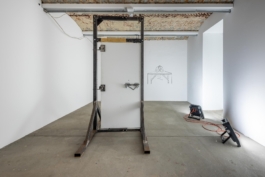
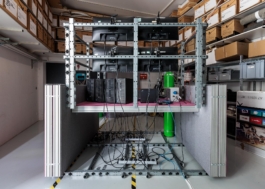
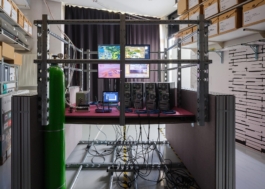
Michael Stevenson: An Introduction
(publication)
2013
a first published collection of practice
inc. science fiction, anthropology, philosophy
—a primer with page cutouts...
Museo Tamayo Arte Contemporáneo, Mexico City 2012
Portikus, Frankfurt 2012
Verlag der Buchhandlung Walther König, Cologne
2013
an artist book by Michael Stevenson
& Jan Verwoert—in times of uncertainity
financial—otherwise
a collaborative writing game
—"Give Me More!"
Published jointly by JRP|Ringier, Zurich
& Clouds, Auckland 2013
inc.
daylight, paper aircraft model, mirror,
lens, plexiglas & buttermilk…
Portikus, Frankfurt am Main 2012
(publication)
2012
a short rumination on flight
on weight-reduced paper stock
—opened in the hand
its pages float while turning…
Museo Tamayo Arte Contemporáneo, Mexico City 2012
Portikus, Frankfurt 2012
Verlag der Buchhandlung Walther König, Cologne
2007
inc.
cardboard, wood, steel, fabric remnant, aircon
ducts, & avian remains…
Arnolfini, Bristol 2008
Art Unlimited, Art Basel, Basel 2007
inc.
60-litres of circulating water denominated in
dollars, Plexiglas, steel, plasticine, string—
a calculator for total national income minus
—the drips, splashes & leaks onto
cinder blocks beneath…
MoMA, New York 2023
Regen Projects, Los Angeles 2017
Artgenève, Geneva 2012
Museum of Contemporary Art, Sydney 2011
ZKM, Museum für Neue Kunst, Karlsruhe 2011
The Power Plant, Toronto 2008
Göteborgs Konsthall, Göteborg 2008
Tate Modern, London 2007
Vilma Gold, London 2007
CCA Wattis Institute for Contemporary Arts
San Francisco 2006
© 2024. Digital image, The Museum of Modern Art, New York/Scala, Florence
c/o The Central Bank of Guatemala
(publication)
2006
inc.
primary source materials from the
Central Bank of Guatemala
—with the kind assistance of its
longest serving employees…
Capp St Project -
CCA Wattis Institute for Contemporary Arts 2006
inc.
gold-leaf—bricks
chaos...
Museum of Contemporary Art, Sydney 2010
Städtisches Museum Abteiberg, Mönchengladbach 2005
Vilma Gold, London 2005
Art of the Eighties and Seventies
(publication)
2006
dust jacket, hard-bound linen cover,
text descending the spine—
mimetic cravings for a certain Rizzoli catalogue
& the lost cause of its art collection
Städtisches Museum Abteiberg, Mönchengladbach 2005
REVOLVER - ARCHIV FÜR AKTUELLE KUNST, Frankfurt
inc.
straw, mud, mica, withered rice cultivars, rusting
steel—a search for a pocket-sized private
apartment in a post-modern civic museum or
—an ode to collecting art…
Städtisches Museum Abteiberg, Mönchengladbach 2005
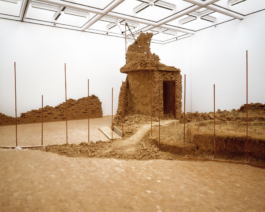
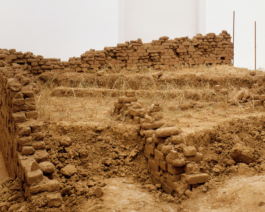
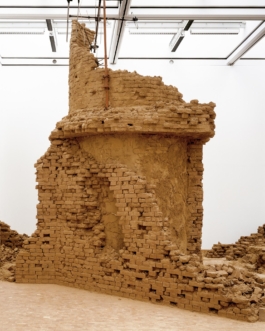
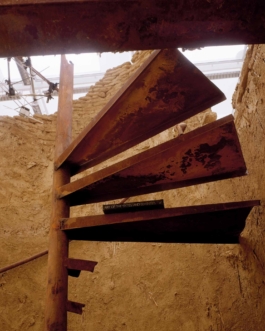
inc.
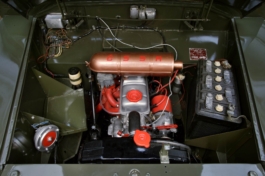
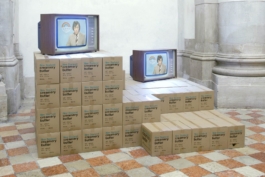
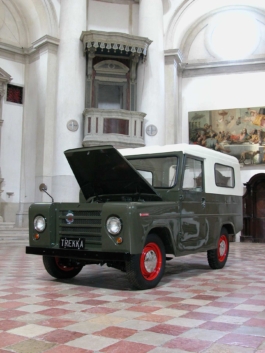
sheet metal, Skoda powertrain, sheep
skins & butter—a white paper
for the coming nuclear winter…
Museum of New Zealand Te Papa Tongarewa
City Gallery, Wellington 2005
New Zealand Pavilion, Venice Biennale 2003
inc.
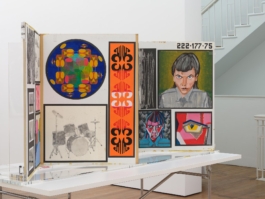
backwardated works in gouache, acrylic, ink,
graphite, marker pen—plus copious
double-sided tape & glue…
Michael Lett Gallery, Auckland 2022
Govett-Brewster Art Gallery, New Plymouth 2000
Michael Stevenson
Berlin, Germany
Contact:
E-Mail: info@michaelstevenson.info
Responsible for content:
Michael Stevenson
Copyright:
All images and content on this website are protected by copyright law.
Unauthorized use, reproduction, or distribution of any content is prohibited without prior written consent.
Design: Michael Stevenson in collaboration
with Joseph Lanzinger
Text: Michael Stevenson with editorial assistance
from Habib William Kherbek
Built on Word Press xx.09.2024


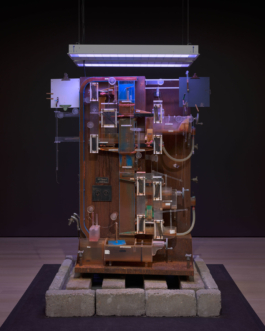
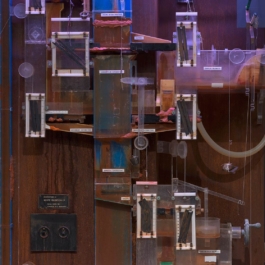
60 litres of circulating water, plexiglass, steel, aluminium, brass, plasticine,
string and the sounds of drips and splashes on wet cinder blocks ...
“It was not IBM compatible,” recalled Don Alberto Muñoz, when asked for his first impressions of a then novel computing tool: the MONIAC or Phillips Machine, when it arrived at the Central Bank of Guatemala in 1953. The machine was designed and built by the economist A.W.H. (Bill) Phillips in 1949 during his studies at the London School of Economics. He developed a water-based, large-scale analog computer for calculating a nation’s total income or, in other words, a physical model of the national economy. Water, Phillips' medium of choice, becomes money: dynamic, fluid, fixed in volume, but eternally changing shape.
In reserve or flowing across a series of interconnected plexi tanks, drains, and chokepoints, the water disperses into discrete volumes to be quantified and calibrated as dollars. Phillips' choice was pragmatic - in earlier days he’d been an engineer on a hydroelectric dam. Deeply enchanting the MONIAC may be, but compatible with the imperatives of the tech titan IBM it was not. Phillips envisioned the device as a visual aid for the classroom. Why a central bank would need such a tool remained unclear even after it was ensconced in Guatemala. What’s more, it leaked.
To say its record of achievement is mixed would be an overstatement: It was barely used. It could not predict. It did not model useful data; however, these capacities obscured what its primary role turned out to be: the machine was a witness to extraordinary times. In 1953 just eyeballing the MONIAC may have given rise to hope. Its imposing (if complex) presence represented the incarnation of an independent Guatemalan economy ...
60 litres of circulating water, plexiglass, steel, aluminium, brass, plasticine,
string and the sounds of drips and splashes on wet cinder blocks ...
“It was not IBM compatible,” recalled Don Alberto Muñoz, when asked for his first impressions of a then novel computing tool: the MONIAC or Phillips Machine, when it arrived at the Central Bank of Guatemala in 1953. The machine was designed and built by the economist A.W.H. (Bill) Phillips in 1949 during his studies at the London School of Economics. He developed a water-based, large-scale analog computer for calculating a nation’s total income or, in other words, a physical model of the national economy. Water, Phillips' medium of choice, becomes money: dynamic, fluid, fixed in volume, but eternally changing shape.
In reserve or flowing across a series of interconnected plexi tanks, drains, and chokepoints, the water disperses into discrete volumes to be quantified and calibrated as dollars. Phillips' choice was pragmatic - in earlier days he’d been an engineer on a hydroelectric dam. Deeply enchanting the MONIAC may be, but compatible with the imperatives of the tech titan IBM it was not. Phillips envisioned the device as a visual aid for the classroom. Why a central bank would need such a tool remained unclear even after it was ensconced in Guatemala. What’s more, it leaked.
To say its record of achievement is mixed would be an overstatement: It was barely used. It could not predict. It did not model useful data; however, these capacities obscured what its primary role turned out to be: the machine was a witness to extraordinary times. In 1953 just eyeballing the MONIAC may have given rise to hope. Its imposing (if complex) presence represented the incarnation of an independent Guatemalan economy ...

—a counterweight decoupled from its troubled empirical rival: the seething mess of American corporate interests swallowing the country’s GDP. This was not simply a metaphorical swallowing: the revolutionary government of Jacobo Árbenz recently had begun a programme for agrarian reform, upending the dominance of the United Fruit Company, the world’s largest banana producer. For some 15-months the MONIAC witnessed this geopolitical standoff before in 1954, a CIA-led coup toppled Árbenz. Soon after the machine disappeared, its fate today remains unknown. As a promissory note betokening a different future, the MONIAC turned into a kind of sunk cost fallacy of the past.
2023 »Chosen Memories, Contemporary Latin American Art from the
Patricia Phelps de Cisneros Gift and Beyond« Museum of Modern Art, New York
2017 »Primordial Saber Tararear Proverbiales Sílabas Tonificantes Para Sublevar
Tecnocracias Pero Seguir Tenazmente Produciendo Sociedades Tántricas –
Pedro Salazar Torres (Partido Socialista Trabajador)« Regen Projects, Los Angeles
2012 »Magic Love Trade Objects« Artgenève, Geneva
2011 »The Global Contemporary, Kunstwelten nach 1989«
ZKM, Museum für Neue Kunst, Karlsruhe
2011 »Michael Stevenson« Museum of Contemporary Art, Sydney
2008 »History Acts« Göteborgs Konsthall, Göteborg
2008 »Not Quite How I Remember It« The Power Plant, Toronto
2007 »The Irresistible Force« Tate Modern, London
2007 »Answers to Some Questions about Bananas« Vilma Gold, London
2006 »c/o The Central Bank of Guatemala« CCA Wattis Institute for Contemporary Arts,
San Francisco
© 2024. Digital image, The Museum of Modern Art, New York/Scala, Florence
—a counterweight decoupled from its troubled empirical rival: the seething mess of American corporate interests swallowing the country’s GDP. This was not simply a metaphorical swallowing: the revolutionary government of Jacobo Árbenz recently had begun a programme for agrarian reform, upending the dominance of the United Fruit Company, the world’s largest banana producer. For some 15-months the MONIAC witnessed this geopolitical standoff before in 1954, a CIA-led coup toppled Árbenz. Soon after the machine disappeared, its fate today remains unknown. As a promissory note betokening a different future, the MONIAC turned into a kind of sunk cost fallacy of the past.
2023 »Chosen Memories, Contemporary Latin American Art from the
Patricia Phelps de Cisneros Gift and Beyond« Museum of Modern Art, New York
2017 »Primordial Saber Tararear Proverbiales Sílabas Tonificantes Para Sublevar
Tecnocracias Pero Seguir Tenazmente Produciendo Sociedades Tántricas –
Pedro Salazar Torres (Partido Socialista Trabajador)« Regen Projects, Los Angeles
2012 »Magic Love Trade Objects« Artgenève, Geneva
2011 »The Global Contemporary, Kunstwelten nach 1989«
ZKM, Museum für Neue Kunst, Karlsruhe
2011 »Michael Stevenson« Museum of Contemporary Art, Sydney
2008 »History Acts« Göteborgs Konsthall, Göteborg
2008 »Not Quite How I Remember It« The Power Plant, Toronto
2007 »The Irresistible Force« Tate Modern, London
2007 »Answers to Some Questions about Bananas« Vilma Gold, London
2006 »c/o The Central Bank of Guatemala« CCA Wattis Institute for Contemporary Arts,
San Francisco
© 2024. Digital image, The Museum of Modern Art, New York/Scala, Florence

Think of it as Gaming the System in a transcendental sense: lots of rules, mercy as a liability, zero sum. To counter these spatial possessions, the rules of common property law are applied. Curiously, the demonic hierarchies comply.
The ramshackle assemblage that composes this instruction appears to be little more than an aircraft tyre, an electric piano stand, and an in-flight blanket. But those who have knowledge will see more. It may well pass as a wishing well, but wishes run in multiple directions. It is a well that foments its own rules, order, and worldview.
2023 »Humans & Demons« steirischerherbst'23, Graz
2021 »Disproof Does Not Equal Disbelief« KW Institute for Contemporary Art, Berlin
2019 »Serene Velocity in Practice: MC510/CS183« MUMA, Melbourne
2018 »SUPERPOSITION: Equilibrium & Engagement« 21st Biennale of Sydney, Sydney
2017 »Serene Velocity in Practice: MC510/CS183« Auckland Art Gallery, Auckland
Think of it as Gaming the System in a transcendental sense: lots of rules, mercy as a liability, zero sum. To counter these spatial possessions, the rules of common property law are applied. Curiously, the demonic hierarchies comply.
The ramshackle assemblage that composes this instruction appears to be little more than an aircraft tyre, an electric piano stand, and an in-flight blanket. But those who have knowledge will see more. It may well pass as a wishing well, but wishes run in multiple directions. It is a well that foments its own rules, order, and worldview.
2023 »Humans & Demons« steirischerherbst'23, Graz
2021 »Disproof Does Not Equal Disbelief« KW Institute for Contemporary Art, Berlin
2019 »Serene Velocity in Practice: MC510/CS183« MUMA, Melbourne
2018 »SUPERPOSITION: Equilibrium & Engagement« 21st Biennale of Sydney, Sydney
2017 »Serene Velocity in Practice: MC510/CS183« Auckland Art Gallery, Auckland

V-form keyboard stand, scrap commercial aircraft tyre,
squatters declaration of rights, spirit mappers, Jericho marchers,
comfort blankets, wasp nest decoys, and rain chains …
A city’s water supply is critical to its infrastructure. Clean drinking water is essential and therefore sacred and protected.
The Rules… is a speculative teaching aid, taking the form of an enchanted wishing well for apparent use in a practical course in Spiritual Warfare: core curriculum in the Serene Velocity… MC510 programme. In this worldview the veil is lifted and spiritual influence is revealed... as counterfeit statecraft no less. Demons can for example battle for and earn “squatters rights” for critical infrastructure, and, therefore, territorial control over swathes of a city.
V-form keyboard stand, scrap commercial aircraft tyre,
squatters declaration of rights, spirit mappers, Jericho marchers,
comfort blankets, wasp nest decoys, and rain chains …
A city’s water supply is critical to its infrastructure. Clean drinking water is essential and therefore sacred and protected.
The Rules… is a speculative teaching aid, taking the form of an enchanted wishing well for apparent use in a practical course in Spiritual Warfare: core curriculum in the Serene Velocity… MC510 programme. In this worldview the veil is lifted and spiritual influence is revealed... as counterfeit statecraft no less. Demons can for example battle for and earn “squatters rights” for critical infrastructure, and, therefore, territorial control over swathes of a city.

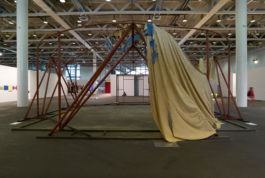
cardboard, wood, steel, fabric remnant, aircon ducts
and avian remains ...
A three-day party for monarchs and world leaders celebrating twenty-five centuries of culture, the tent city of Persepolis ’71 was built on one of the world’s most important archaeological locations - a UNESCO heritage site. It was a tribute to the Ozymandian hubris of the potentate of the Peacock Throne, Shah of Shahs, King of Kings (to date the last) Mohammad Reza Pahlavi Shah. To gather the countries of the world, or at least fly in their select rulers, was to garner legitimacy at a moment when the divine right of the monarchy was being called to question.
The site itself was a European import direct from Paris; one-hundred-and-sixty acres designed by the House of Jansen visible as a star, but only from above, the god’s eye view. Beneath the symbolism (literally) crawled snakes and scorpions. European trees offered shade and housing to songbirds, 50,000 of them it was claimed, which were also flown in for the festivities. Removed from their natural habitat, they fell from the sky within days. A certain tension between air and ground became a hallmark of the last Shah. He was an enthusiastic aviator who was never completely at ease on the ground. In 1979, when he left Iran, he would self-pilot the aircraft of his own exile.
Back on the ground with no clear plan for the afterparty, the site was looted, even as its guests departed. The time-warped remnants endure today; overgrown, dilapidated, vandalised, and still contentious.
2008 »Persepolis 2530« Arnolfini, Bristol
2007 »Persepolis 2530« Art Unlimited, Art Basel
cardboard, wood, steel, fabric remnant, aircon ducts
and avian remains ...
A three-day party for monarchs and world leaders celebrating twenty-five centuries of culture, the tent city of Persepolis ’71 was built on one of the world’s most important archaeological locations - a UNESCO heritage site. It was a tribute to the Ozymandian hubris of the potentate of the Peacock Throne, Shah of Shahs, King of Kings (to date the last) Mohammad Reza Pahlavi Shah. To gather the countries of the world, or at least fly in their select rulers, was to garner legitimacy at a moment when the divine right of the monarchy was being called to question.
The site itself was a European import direct from Paris; one-hundred-and-sixty acres designed by the House of Jansen visible as a star, but only from above, the god’s eye view. Beneath the symbolism (literally) crawled snakes and scorpions. European trees offered shade and housing to songbirds, 50,000 of them it was claimed, which were also flown in for the festivities. Removed from their natural habitat, they fell from the sky within days. A certain tension between air and ground became a hallmark of the last Shah. He was an enthusiastic aviator who was never completely at ease on the ground. In 1979, when he left Iran, he would self-pilot the aircraft of his own exile.
Back on the ground with no clear plan for the afterparty, the site was looted, even as its guests departed. The time-warped remnants endure today; overgrown, dilapidated, vandalised, and still contentious.
2008 »Persepolis 2530« Arnolfini, Bristol
2007 »Persepolis 2530« Art Unlimited, Art Basel

Volume II provides another path and the navigation for the broader Disproof Does Not Equal Disbelief exhibition; from the Volume’s contents page the full project can be reviewed and then traversed accordingly.
CONTENTS:
Michael Stevenson
Profiles in Serine Velocity
Book II: Kayfabe Logic
(Disproof Does Not Equal Disbelief)
»Preface«
»Serene Velocity in Practice: MC510/CS183, Michael Stevenson (photo documentation)«
»Disproof Does Not Equal Disbelief, Michael Stevenson«
»Kayfabe Logic, Anna Parlane (essay)«
»Appendix, Michael Stevenson (ephemera material)«
»Schund, Heike Geißler (fiction)«
DESCRIPTION:
248mm x 319mm, 144 pages, 32-page colour section
DESIGN: Will Holder
Published jointly by KW Institute for Contemporary Art and Sternberg Press, Berlin, 2021
ISBN: 978-3-95679-615-9
Volume II provides another path and the navigation for the broader Disproof Does Not Equal Disbelief exhibition; from the Volume’s contents page the full project can be reviewed and then traversed accordingly.
CONTENTS:
Michael Stevenson
Profiles in Serine Velocity
Book II: Kayfabe Logic
(Disproof Does Not Equal Disbelief)
»Preface«
»Serene Velocity in Practice: MC510/CS183, Michael Stevenson (photo documentation)«
»Disproof Does Not Equal Disbelief, Michael Stevenson«
»Kayfabe Logic, Anna Parlane (essay)«
»Appendix, Michael Stevenson (ephemera material)«
»Schund, Heike Geißler (fiction)«
DESCRIPTION:
248mm x 319mm, 144 pages, 32-page colour section
DESIGN: Will Holder
Published jointly by KW Institute for Contemporary Art and Sternberg Press, Berlin, 2021
ISBN: 978-3-95679-615-9

A hardcover enclosing 2 documents bound with a single rubber band. Upon opening they separate into their essential parts…
Volume I immerses the reader in course materials from MC510 and CS183, the dual study programme at the heart of the Serene Velocity project. A 6-step problem solving matrix from Mission Class 510 provides signposts for assessing progress. Heat sink profiles used to cool hardware, the technological driving force behind the Computer Science 183 programme, appear as templates typographically reorganising each page into a matrix of concrete poetry.
CONTENTS:
Michael Stevenson
Profiles in Serene Velocity
Book I: Cultural Dope
(schematic class notes for MC510/CS183)
»Preface«
»I State the Problem«
»II What is Causing It?«
»III What are My Options for Solving It?«
»IV Do I Need To – Develop a New Programme for this? – Modify an Old One?«
»V Which Program is Most Feasible at This Time?«
»VI My Action Conclusion is:«
DESCRIPTION: 248mm x 319mm, 136 pages, 4-page colour section, spiral bound
DESIGN: Will Holder
Published by Monash University, Museum of Art, Melbourne, 2019
ISBN: 978-0-6481529-5-8
A hardcover enclosing 2 documents bound with a single rubber band. Upon opening they separate into their essential parts…
Volume I immerses the reader in course materials from MC510 and CS183, the dual study programme at the heart of the Serene Velocity project. A 6-step problem solving matrix from Mission Class 510 provides signposts for assessing progress. Heat sink profiles used to cool hardware, the technological driving force behind the Computer Science 183 programme, appear as templates typographically reorganising each page into a matrix of concrete poetry.
CONTENTS:
Michael Stevenson
Profiles in Serene Velocity
Book I: Cultural Dope
(schematic class notes for MC510/CS183)
»Preface«
»I State the Problem«
»II What is Causing It?«
»III What are My Options for Solving It?«
»IV Do I Need To – Develop a New Programme for this? – Modify an Old One?«
»V Which Program is Most Feasible at This Time?«
»VI My Action Conclusion is:«
DESCRIPTION: 248mm x 319mm, 136 pages, 4-page colour section, spiral bound
DESIGN: Will Holder
Published by Monash University, Museum of Art, Melbourne, 2019
ISBN: 978-0-6481529-5-8

stretched, gridded airline blankets and scrap aircraft tyres,
finned aluminium heat sink and bird spikes
a covered walkway between ...
“You must begin by studying the endgame.“
Irving Chernev Capablanca's Best Chess Endings
(from CS183 course reading list)
“Foregleams of its splendor are already discernible”
George Eldon Ladd The Presence of the Future
(from MC510 course reading list)
Mission Class 510, or MC510, was first taught in the winter semester of 1982 at the Fuller Theological Seminary in Pasadena. John Wimber, of the Vineyard Ministries, founded and ran this programme for four years, using it as a testing ground to bring forward the future Kingdom - its outlines discernible in present day miraculous healings and exorcisms. Practical sessions or ‘clinics’ involving both students and staff became an experimental laboratory for the willing where the healed could become the healer.
In the spring semester of 2012, Stanford University’s Computer Science faculty offered CS183. Peter Thiel, the Silicon Valley entrepreneur and venture capitalist taught this option under the course title Startup, or How to Build the Future. Thiel used case histories and a form of exegesis to interpret failure in the tech industry’s present, and to presage a future of accelerated progress. This future will be either much worse or much better than the present, technology, the miraculous elixir will be the decider.
stretched, gridded airline blankets and scrap aircraft tyres,
finned aluminium heat sink and bird spikes
a covered walkway between ...
“You must begin by studying the endgame.“
Irving Chernev Capablanca's Best Chess Endings
(from CS183 course reading list)
“Foregleams of its splendor are already discernible”
George Eldon Ladd The Presence of the Future
(from MC510 course reading list)
Mission Class 510, or MC510, was first taught in the winter semester of 1982 at the Fuller Theological Seminary in Pasadena. John Wimber, of the Vineyard Ministries, founded and ran this programme for four years, using it as a testing ground to bring forward the future Kingdom - its outlines discernible in present day miraculous healings and exorcisms. Practical sessions or ‘clinics’ involving both students and staff became an experimental laboratory for the willing where the healed could become the healer.
In the spring semester of 2012, Stanford University’s Computer Science faculty offered CS183. Peter Thiel, the Silicon Valley entrepreneur and venture capitalist taught this option under the course title Startup, or How to Build the Future. Thiel used case histories and a form of exegesis to interpret failure in the tech industry’s present, and to presage a future of accelerated progress. This future will be either much worse or much better than the present, technology, the miraculous elixir will be the decider.

sheet metal folded around a Skoda powertrain, fibreglass canopy,
sheep skin seat covers, 25kg butter boxes –
a white paper for outlasting the coming nuclear winter …
“You can have it in any colour, as long as it’s green,” ran the sales pitch for the Trekka, to date New Zealand’s only mass-produced automobile. The vehicle itself was a geopolitical amalgam, a workaround of local import tariffs in combo with a detour—unauthorised—around the Iron Curtain. Rolled out nationally across car yards from 1966 to 1972, the Trekka’s ‘unique production cycle’ made it cheaper. In NZ’s grass economy, born from an agricultural island where thinking was still fixed in tons of export butter, a locally-produced automobile represented direct savings as a corresponding volume of displaced milk fat.
Home-grown, fridges, washing machines, TVs, etc. would follow, a cultivated manufacturing base to sustain dreams amongst the clover, the topsoil for a new Eden beyond the spectre of global nuclear war. The Trekka lends these timeworn concerns a shape, a form, and an aesthetic. The product of a locally produced sheet-metal body and an imported Skoda powertrain, the Trekka was designed for the farm and looked like 4WD, yet it was not. The vehicle’s business plan was driven by the most unlikely roundabout of interests and buffed to a high gloss with a sheen of nation-building sentiment, not a million miles from the social sentiment driving the meme stock phenomenon. Not the smoothest of rides but, it might just get you there after all …
2003 »This is the Trekka« New Zealand pavillion, Venice Biennale
2005 »Small World, Big Town – Contemporary Art from Te Papa«
Wellington City Gallery, Wellington
sheet metal folded around a Skoda powertrain, fibreglass canopy,
sheep skin seat covers, 25kg butter boxes –
a white paper for outlasting the coming nuclear winter …
“You can have it in any colour, as long as it’s green,” ran the sales pitch for the Trekka, to date New Zealand’s only mass-produced automobile. The vehicle itself was a geopolitical amalgam, a workaround of local import tariffs in combo with a detour—unauthorised—around the Iron Curtain. Rolled out nationally across car yards from 1966 to 1972, the Trekka’s ‘unique production cycle’ made it cheaper. In NZ’s grass economy, born from an agricultural island where thinking was still fixed in tons of export butter, a locally-produced automobile represented direct savings as a corresponding volume of displaced milk fat.
Home-grown, fridges, washing machines, TVs, etc. would follow, a cultivated manufacturing base to sustain dreams amongst the clover, the topsoil for a new Eden beyond the spectre of global nuclear war. The Trekka lends these timeworn concerns a shape, a form, and an aesthetic. The product of a locally produced sheet-metal body and an imported Skoda powertrain, the Trekka was designed for the farm and looked like 4WD, yet it was not. The vehicle’s business plan was driven by the most unlikely roundabout of interests and buffed to a high gloss with a sheen of nation-building sentiment, not a million miles from the social sentiment driving the meme stock phenomenon. Not the smoothest of rides but, it might just get you there after all …
2003 »This is the Trekka« New Zealand pavillion, Venice Biennale
2005 »Small World, Big Town – Contemporary Art from Te Papa«
Wellington City Gallery, Wellington

latex, crepe de chine, chenille, and Tears 4 Fears,
reunited for a fictional Telethon, with pledge letter
courtesy of a fan named “Shout”…
2022 »The Cheap Heat« Fine Arts, Sydney
latex, crepe de chine, chenille, and Tears 4 Fears,
reunited for a fictional Telethon, with pledge letter
courtesy of a fan named “Shout”…
2022 »The Cheap Heat« Fine Arts, Sydney

foldable plexi shield, acoustic foam, lunar sample #15415 replica, lunar
regolith simulant, a model cardboard ark and casts of paws & hooves ...
It starts with a moonshot, not just in the aspirational sense. What happens once the engines fall silent and the Eagle has landed? The reality is intensely visceral: boots settling in lunar regolith, electrolyte imbalance, heart arrhythmia. The physical weight of Discovery.
The astronaut James Irwin was the lunar module pilot for Apollo 15, and the eighth person to walk on the moon. His was the first “J” Mission, longer than previous landings and correspondingly more extreme in its toll on the body. On his mission, Irwin collected Apollo’s most significant lunar mineral sample, dubbed by the media, “the Genesis Rock”. While traversing the lunar surface, Irwin claimed voices were guiding him in his work, and towards the location of the sample. When the Genesis Rock was dated, its age came to 4-billion years … and counting.
Returning to earth, Irwin took with him not just the mineral samples, but the voices, too, and a different timeline was conjured inside him. Now sublunary, Irwin went on to found an evangelical organization endorsing a biblical worldview in which the Genesis-based creation narrative sees the world being created in 6 days then drowned in a global flood some 4,500 years ago. Genesis Rock notwithstanding, Irwin’s next years were spent in locating Noah’s Ark. The voices never went away for Irwin, but the ship that saved all species and landed them a new life, on a renewed planet, remains on the mountain unfounded.
2021 «The Earth Is Flat Again« Muzeum Sztuki, Łódź
2020 «Michael Stevenson« Kunstinstituut Melly, Rotterdam
2020 «Disproof Does Not Equal Disbelief« Fine Arts, Sydney
foldable plexi shield, acoustic foam, lunar sample #15415 replica, lunar
regolith simulant, a model cardboard ark and casts of paws & hooves ...
It starts with a moonshot, not just in the aspirational sense. What happens once the engines fall silent and the Eagle has landed? The reality is intensely visceral: boots settling in lunar regolith, electrolyte imbalance, heart arrhythmia. The physical weight of Discovery.
The astronaut James Irwin was the lunar module pilot for Apollo 15, and the eighth person to walk on the moon. His was the first “J” Mission, longer than previous landings and correspondingly more extreme in its toll on the body. On his mission, Irwin collected Apollo’s most significant lunar mineral sample, dubbed by the media, “the Genesis Rock”. While traversing the lunar surface, Irwin claimed voices were guiding him in his work, and towards the location of the sample. When the Genesis Rock was dated, its age came to 4-billion years … and counting.
Returning to earth, Irwin took with him not just the mineral samples, but the voices, too, and a different timeline was conjured inside him. Now sublunary, Irwin went on to found an evangelical organization endorsing a biblical worldview in which the Genesis-based creation narrative sees the world being created in 6 days then drowned in a global flood some 4,500 years ago. Genesis Rock notwithstanding, Irwin’s next years were spent in locating Noah’s Ark. The voices never went away for Irwin, but the ship that saved all species and landed them a new life, on a renewed planet, remains on the mountain unfounded.
2021 «The Earth Is Flat Again« Muzeum Sztuki, Łódź
2020 «Michael Stevenson« Kunstinstituut Melly, Rotterdam
2020 «Disproof Does Not Equal Disbelief« Fine Arts, Sydney

eggs, cigar cases, and tablets - placed with precision
on photovoltaic panels ...
“You die and the devil says he'll let you go to heaven if you beat him in a game…”So begins one particular variant of a well-worn aptitude test recycled across tech company interview rooms for decades. To play, you need to know the basics: seated across from each other, you and your opponent take turns putting down single chits on a table-top. Cans, eggs, cigar cases, coins, tablets, over time the representation of the chits has changed, but the rules remain. No overlapping, no stacking; the player who can place the last chit on the table wins.
To win the game (and succeed in the interview) you must mimic the competition, but to build a successful startup, you must escape the competition, create something new. Successful game strategies play out, but the greater challenge, building a compelling monopoly with a future expected value not evident today, remains the most elusive chit to place on the table.
If the entry bar for hiring, or participation in the class were not yet sufficiently raised, play-offs in Serene Velocity… CS183 happen across gaming tables that are themselves highly charged. Five photovoltaic panels, a solar array configured in the format of a seminar room provide a grid for more accurate chit placement. Green Ghosts are how they’re named. Each panel is an object lesson, a proprietary system from a solar startup that filed for bankruptcy in 2012.
IN EXHIBITION:
2021 »Disproof Does Not Equal Disbelief« KW Institute for Contemporary Art, Berlin
2019 »Serene Velocity in Practice: MC510/CS183« MUMA, Melbourne
2018 »SUPERPOSITION: Equilibrium & Engagement« 21st Biennale of Sydney, Sydney
2017 »Serene Velocity in Practice: MC510/CS183« Auckland Art Gallery, Auckland
eggs, cigar cases, and tablets - placed with precision
on photovoltaic panels ...
“You die and the devil says he'll let you go to heaven if you beat him in a game…”So begins one particular variant of a well-worn aptitude test recycled across tech company interview rooms for decades. To play, you need to know the basics: seated across from each other, you and your opponent take turns putting down single chits on a table-top. Cans, eggs, cigar cases, coins, tablets, over time the representation of the chits has changed, but the rules remain. No overlapping, no stacking; the player who can place the last chit on the table wins.
To win the game (and succeed in the interview) you must mimic the competition, but to build a successful startup, you must escape the competition, create something new. Successful game strategies play out, but the greater challenge, building a compelling monopoly with a future expected value not evident today, remains the most elusive chit to place on the table.
If the entry bar for hiring, or participation in the class were not yet sufficiently raised, play-offs in Serene Velocity… CS183 happen across gaming tables that are themselves highly charged. Five photovoltaic panels, a solar array configured in the format of a seminar room provide a grid for more accurate chit placement. Green Ghosts are how they’re named. Each panel is an object lesson, a proprietary system from a solar startup that filed for bankruptcy in 2012.
IN EXHIBITION:
2021 »Disproof Does Not Equal Disbelief« KW Institute for Contemporary Art, Berlin
2019 »Serene Velocity in Practice: MC510/CS183« MUMA, Melbourne
2018 »SUPERPOSITION: Equilibrium & Engagement« 21st Biennale of Sydney, Sydney
2017 »Serene Velocity in Practice: MC510/CS183« Auckland Art Gallery, Auckland

½ a RoboCop morph suit, Teva sandals, baby bibs with printed
slogans, webcams, a bunk bed and a goodnight mat ...
A charnel house for the AI soul. The head of cyborg law enforcement rests in the lower bunk, dreams of an identical existence in the bunk above. We dream even though we cannot imagine.
As the third decade of surveillance capitalism proceeds, the line between performance and consciousness collapses. In this work the aesthetics of 1980s dystopia become the fulcrum for investigating the future subjectivities of an emerging culture of psychic dispossession and spectacular abjection, ranging from street poverty to organised forms such as mental health fundraising telethons. The world of the future will be fully surveilled and quantised. Social and financial credit can be fused, as in charitable giving, but the baseness of the human soul remains—as does broadcast TV. In the future, all sins will be original.
The role of the sculpture as a site of contention between interior states and materiality here seeks a new level: what may be felt gains meaning only through externalisation. Living in this new hyperscopia, the nature and quality of one’s identity, vulnerability, or suffering are subject to continuous evaluation, and compassion (or contempt) are portioned out accordingly to a self-selecting audience. The language born in this crucible will be as vapid as it will be participatory, compressing identities into slogans dressed as mantras, then to humans dressed as slogans, walking billboards and their posterchildren. Will we eat baby food forever?
2022 »The Cheap Heat« Fine Arts, Sydney
½ a RoboCop morph suit, Teva sandals, baby bibs with printed
slogans, webcams, a bunk bed and a goodnight mat ...
A charnel house for the AI soul. The head of cyborg law enforcement rests in the lower bunk, dreams of an identical existence in the bunk above. We dream even though we cannot imagine.
As the third decade of surveillance capitalism proceeds, the line between performance and consciousness collapses. In this work the aesthetics of 1980s dystopia become the fulcrum for investigating the future subjectivities of an emerging culture of psychic dispossession and spectacular abjection, ranging from street poverty to organised forms such as mental health fundraising telethons. The world of the future will be fully surveilled and quantised. Social and financial credit can be fused, as in charitable giving, but the baseness of the human soul remains—as does broadcast TV. In the future, all sins will be original.
The role of the sculpture as a site of contention between interior states and materiality here seeks a new level: what may be felt gains meaning only through externalisation. Living in this new hyperscopia, the nature and quality of one’s identity, vulnerability, or suffering are subject to continuous evaluation, and compassion (or contempt) are portioned out accordingly to a self-selecting audience. The language born in this crucible will be as vapid as it will be participatory, compressing identities into slogans dressed as mantras, then to humans dressed as slogans, walking billboards and their posterchildren. Will we eat baby food forever?
2022 »The Cheap Heat« Fine Arts, Sydney

a freestanding wall with post-modern pretensions
a formal directive to pass through modified by an informal nudge
to instead ... pass around ...
If, on the way to the office, you saw a child drowning in a pond,
would your intention be to save it? Would that intention change
if you were wearing new shoes and saving the child meant
they’d be ruined and you’d be late for your business meeting?
So begins a thought experiment rendered here as a door knocker at what could be the entrance to a suburban family home. A provocative thought exercise formulated by moral philosopher Peter Singer, on the doorstep of moral behavior’s ancestral site of safe keeping. This idea represents a touchstone of sorts for the Effective Altruism movement, a global community of economic empaths who employ a quantitative approach to charity using evidence and reason to maximise aggregate long-term happiness and to minimise suffering.
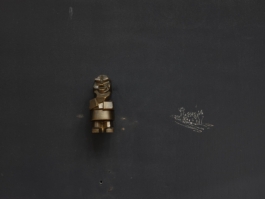
The knocker you grasp to rap on the door—a brass figurine—renders visible Singer’s challenge: does distance matter? Cast of metal it’s demeanour remains set - deep in thought, unaware, eyebrows minus eyes, whilst on its left, scratched into the door a child appears struggling in water. Why do we not recognize the same duty toward those who are physically distant? To reach the door, however, a front porch must first be traversed. Composed of raw fused plastic waste, this one nods to the past (and squints at the future). If your shoes are not yet ruined by an intervention at the pond of moral uncertainty, they’re sure to be sullied in this garbage.
2023 »Waiting for the Other Shoe to Drop: seating proposals for a Grantmaker«
Michael Lett Gallery, Auckland
a freestanding wall with post-modern pretensions
a formal directive to pass through modified by an informal nudge
to instead ... pass around ...
If, on the way to the office, you saw a child drowning in a pond,
would your intention be to save it? Would that intention change
if you were wearing new shoes and saving the child meant
they’d be ruined and you’d be late for your business meeting?
So begins a thought experiment rendered here as a door knocker at what could be the entrance to a suburban family home. A provocative thought exercise formulated by moral philosopher Peter Singer, on the doorstep of moral behavior’s ancestral site of safe keeping. This idea represents a touchstone of sorts for the Effective Altruism movement, a global community of economic empaths who employ a quantitative approach to charity using evidence and reason to maximise aggregate long-term happiness and to minimise suffering.
The knocker you grasp to rap on the door—a brass figurine—renders visible Singer’s challenge: does distance matter? Cast of metal it’s demeanour remains set - deep in thought, unaware, eyebrows minus eyes, whilst on its left, scratched into the door a child appears struggling in water. Why do we not recognize the same duty toward those who are physically distant? To reach the door, however, a front porch must first be traversed. Composed of raw fused plastic waste, this one nods to the past (and squints at the future). If your shoes are not yet ruined by an intervention at the pond of moral uncertainty, they’re sure to be sullied in this garbage.
2023 »Waiting for the Other Shoe to Drop: seating proposals for a Grantmaker«
Michael Lett Gallery, Auckland

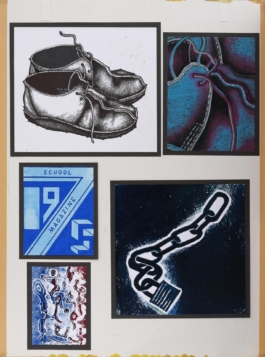
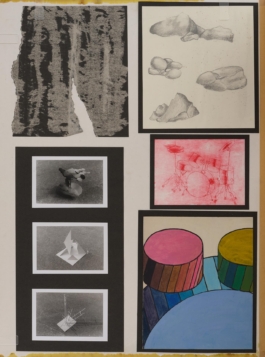
plexi cradle, cardboard display boards including works in gouache,
acrylic, marker pen, double-sided tape and glue ...
“Business in the front, party in the back”: two distinct personalities in one unique hairstyle. The mullet, a fashion statement par excellence: short at the front, top and sides, long in the back, where luxuriant follicles flow like a waterfall of freedom. Flaunted on the stage since the glam-rock era, its raw audaciousness finds an unlikely recapitulation in the obligatory art portfolio for entry-level school examinations.
Art education on the horns of a dilemma: on one exam boards remain shackled to their syllabus - a neat series of well-kempt, unimaginative, socially acceptable exercises that can be systematically coordinated by the examiner. On the other, there are the anarchic endeavours of students who regularly break the academic shackles and desublimate the approved course - where prescribed drawing is demanded - thus, adolescent anarchy is loosed upon the page.
This project reconstructs a group of entry-level art portfolios reverse-engineered from the current practice of a number of notable contemporary New Zealand artists. The folios replicate in detail the mechanical exercises prescribed for the high school examination, and the admirable efforts of the students to circumvent these draconian restrictions. Each folio includes an imaginary portrait of the adolescent artist - aged 15, and still in two minds - a condition best captured in their hairstyle, an exercise in duality: business in the front, party in the back!
2022 »Creation Stories« Michael Lett Gallery, Auckland
2015 Michael Lett Gallery, Auckland
2000 »Genealogy« Govett-Brewster Art Gallery, New Plymouth
plexi cradle, cardboard display boards including works in gouache,
acrylic, marker pen, double-sided tape and glue ...
“Business in the front, party in the back”: two distinct personalities in one unique hairstyle. The mullet, a fashion statement par excellence: short at the front, top and sides, long in the back, where luxuriant follicles flow like a waterfall of freedom. Flaunted on the stage since the glam-rock era, its raw audaciousness finds an unlikely recapitulation in the obligatory art portfolio for entry-level school examinations.
Art education on the horns of a dilemma: on one exam boards remain shackled to their syllabus - a neat series of well-kempt, unimaginative, socially acceptable exercises that can be systematically coordinated by the examiner. On the other, there are the anarchic endeavours of students who regularly break the academic shackles and desublimate the approved course - where prescribed drawing is demanded - thus, adolescent anarchy is loosed upon the page.
This project reconstructs a group of entry-level art portfolios reverse-engineered from the current practice of a number of notable contemporary New Zealand artists. The folios replicate in detail the mechanical exercises prescribed for the high school examination, and the admirable efforts of the students to circumvent these draconian restrictions. Each folio includes an imaginary portrait of the adolescent artist - aged 15, and still in two minds - a condition best captured in their hairstyle, an exercise in duality: business in the front, party in the back!
2022 »Creation Stories« Michael Lett Gallery, Auckland
2015 Michael Lett Gallery, Auckland
2000 »Genealogy« Govett-Brewster Art Gallery, New Plymouth

foldable plexi shield, acoustic foam, dewar, chalkboard marker,
HH Python Power bandana - oversized latex edition
frozen in cryogenic nitrogen and wrestled to the floor ...
“It‘s clear that the scapegoat is extremely powerful.
Scapegoats can turn conflict into peace.“
Peter Thiel Notes Essays–Peter Thiel’s
CS183: Startup Stanford, Spring 2012 compiled by Blake Masters.
Gawker (2002-2016) was a media platform from the burgeoning days of online culture. Gossipy, salacious, inappropriate, and, for a time, powerful and irresistible, it was once described as "an octopus with chainsaws." Gawker broke real news stories, too, and, in the process, irked some of the prominent residents of Silicon Valley. The Valleywag blog was a Gawker tentacle with sufficient reach to disturb their universe … And so it did. It exposed an industry that values its own privacy while simultaneously rendering global privacy obsolete. Gawker’s argument was that others preferred to pay lip service to values of privacy, interiority, and accountability rather than write the words that would offend or critique the powerful. Gawker, though deeply hypocritical, had a point: industry controlled the narrative.
foldable plexi shield, acoustic foam, dewar, chalkboard marker,
HH Python Power bandana - oversized latex edition
frozen in cryogenic nitrogen and wrestled to the floor ...
“It‘s clear that the scapegoat is extremely powerful.
Scapegoats can turn conflict into peace.“
Peter Thiel Notes Essays–Peter Thiel’s
CS183: Startup Stanford, Spring 2012 compiled by Blake Masters.
Gawker (2002-2016) was a media platform from the burgeoning days of online culture. Gossipy, salacious, inappropriate, and, for a time, powerful and irresistible, it was once described as "an octopus with chainsaws." Gawker broke real news stories, too, and, in the process, irked some of the prominent residents of Silicon Valley. The Valleywag blog was a Gawker tentacle with sufficient reach to disturb their universe … And so it did. It exposed an industry that values its own privacy while simultaneously rendering global privacy obsolete. Gawker’s argument was that others preferred to pay lip service to values of privacy, interiority, and accountability rather than write the words that would offend or critique the powerful. Gawker, though deeply hypocritical, had a point: industry controlled the narrative.

handset for an unseen drone, worship timer, magnetic tape, inflight blankets,
stacked wooden aircraft wheel chocks and marshaling wands ...
“British Airways flight BA 092 took off from Toronto airport
on Thursday evening just as the Holy Spirit was landing
on a small building a hundred yards from the end of the runway.”
The Sunday Telegraph, London, 19 June, 1994
This project began its life in a site visit to an airport in an effort to better understand near-miss events between airborne bodies in congested skies.
The congestion was only partly of a material nature.
Air has long been the realm of the spirit world, a belief made visible in the bustling skies of a Byzantine icon painting. It was understood as a substance, distinct from the emptied, gridded, ubiquitous dimension necessary for contemporary aviation and other airborne technologies. Once again it seems the skies are getting crowded.
As if to illustrate this point, the Sunday Telegraph reports, the Toronto Airport Christian Fellowship, an independent charismatic congregation based in a warehouse at Toronto’s international airport who experience intense psycho-physical states when the Holy Spirit descends, have made a home for themselves on the landing strip. Howling, roaring, shaking; prone bodies and raucous laughter, the contrast with the meticulously planned world of material air traffic control.
handset for an unseen drone, worship timer, magnetic tape, inflight blankets,
stacked wooden aircraft wheel chocks and marshaling wands ...
“British Airways flight BA 092 took off from Toronto airport
on Thursday evening just as the Holy Spirit was landing
on a small building a hundred yards from the end of the runway.”
The Sunday Telegraph, London, 19 June, 1994
This project began its life in a site visit to an airport in an effort to better understand near-miss events between airborne bodies in congested skies.
The congestion was only partly of a material nature.
Air has long been the realm of the spirit world, a belief made visible in the bustling skies of a Byzantine icon painting. It was understood as a substance, distinct from the emptied, gridded, ubiquitous dimension necessary for contemporary aviation and other airborne technologies. Once again it seems the skies are getting crowded.
As if to illustrate this point, the Sunday Telegraph reports, the Toronto Airport Christian Fellowship, an independent charismatic congregation based in a warehouse at Toronto’s international airport who experience intense psycho-physical states when the Holy Spirit descends, have made a home for themselves on the landing strip. Howling, roaring, shaking; prone bodies and raucous laughter, the contrast with the meticulously planned world of material air traffic control.

an installation view …
2020 »Michael Stevenson, a solo exhibition« Kunstinstituut Melly, Rotterdam
an installation view …
2020 »Michael Stevenson, a solo exhibition« Kunstinstituut Melly, Rotterdam

an installation view…
2021 »Disproof Does Not Equal Disbelief« KW Institute for Contemporary Art, Berlin
an installation view…
2021 »Disproof Does Not Equal Disbelief« KW Institute for Contemporary Art, Berlin

latex, net, webcam, biodegradable plastic bag -
a fictional telethon, the Hulkster and
an on-camera confessional…
2022 »The Cheap Heat« Fine Arts, Sydney
latex, net, webcam, biodegradable plastic bag -
a fictional telethon, the Hulkster and
an on-camera confessional…
2022 »The Cheap Heat« Fine Arts, Sydney

Outbound and inbound legs share the same time coordinates and flight paths. At some point mid-flight they pass through each other seamlessly. Predestined, uncanny, and foreboding, yet entirely without material consequence, each departure continues on to become the next successful arrival ...
2016 »Signs & Wonders« Carl Freedman Gallery, London
2016 »Signs & Wonders« Midway Contemporary Art, Minneapolis
2015 »Signs & Wonders« Kunsthal Charlottenborg, Copenhagen
Outbound and inbound legs share the same time coordinates and flight paths. At some point mid-flight they pass through each other seamlessly. Predestined, uncanny, and foreboding, yet entirely without material consequence, each departure continues on to become the next successful arrival ...
2016 »Signs & Wonders« Carl Freedman Gallery, London
2016 »Signs & Wonders« Midway Contemporary Art, Minneapolis
2015 »Signs & Wonders« Kunsthal Charlottenborg, Copenhagen

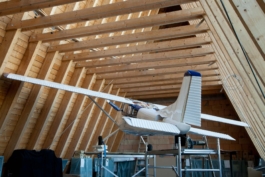
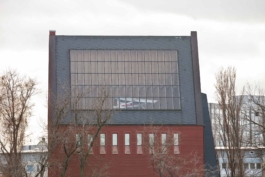
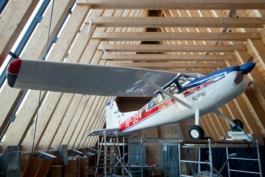
At Portikus the equivalent inaccessible space is the attic, which becomes projectionist’s booth-cum-cockpit, and locus of perceptual protraction. Here a single-engine aircraft, the Aleph-1, is assembled, and positioned. The plane is a replica of one once owned by the avaitor, mathematician, playwright, and professional bodyguard José de Jésus Martínez. His fascination for the mathematician Georg Cantor's Aleph series (ℵ)—a ground-breaking formula to define an infinite hierarchy of infinities—lead to a perculiar naming system for his flying machines: Aleph(0), Aleph(1)... Aleph(∞).
In the attic shooting and projecting, take-off and landing, are simultaneous. A dynamic cinematic continuum is composed; a single yet multidirectional event occurs, and, in this way, processes and temporalities are stretched and diffracted. End and Beginning have no fixed location; filmic notions of time, including duration, pacing, and frame count, are recalibrated towards the infinite. Aleph-1 ... a tiny speck in an uncountable blue.
2012 »A Life of Crudity, Vulgarity, and Blindness« Portikus, Frankfurt
At Portikus the equivalent inaccessible space is the attic, which becomes projectionist’s booth-cum-cockpit, and locus of perceptual protraction. Here a single-engine aircraft, the Aleph-1, is assembled, and positioned. The plane is a replica of one once owned by the avaitor, mathematician, playwright, and professional bodyguard José de Jésus Martínez. His fascination for the mathematician Georg Cantor's Aleph series (ℵ)—a ground-breaking formula to define an infinite hierarchy of infinities—lead to a perculiar naming system for his flying machines: Aleph(0), Aleph(1)... Aleph(∞).
In the attic shooting and projecting, take-off and landing, are simultaneous. A dynamic cinematic continuum is composed; a single yet multidirectional event occurs, and, in this way, processes and temporalities are stretched and diffracted. End and Beginning have no fixed location; filmic notions of time, including duration, pacing, and frame count, are recalibrated towards the infinite. Aleph-1 ... a tiny speck in an uncountable blue.
2012 »A Life of Crudity, Vulgarity, and Blindness« Portikus, Frankfurt

camera plus effects for a telethon …
2021 »Disproof Does Not Equal Disbelief« KW Institute for Contemporary Art, Berlin
camera plus effects for a telethon …
2021 »Disproof Does Not Equal Disbelief« KW Institute for Contemporary Art, Berlin

an installation view…
2022 »The Cheap Heat« Fine Arts, Sydney
an installation view…
2022 »The Cheap Heat« Fine Arts, Sydney

an installation view…
2023 »Waiting for the Other Shoe to Drop: seating proposals for a Grantmaker«
Michael Lett Gallery, Auckland
an installation view…
2023 »Waiting for the Other Shoe to Drop: seating proposals for a Grantmaker«
Michael Lett Gallery, Auckland

an installation view …
2020 »Mind's Eye« Fine Arts, Sydney
an installation view …
2020 »Mind's Eye« Fine Arts, Sydney

This is the first published document to trace the artist’s practice as it developed across a number projects over a 20-year period. Amongst other things, the material collected in this volume straddles documentation, research, science fiction, anthropology, and philosophy. An open-ended structure was used to ensure that the material could offer an overview of Stevenson’s practice while remaining as the title suggests, a primer.
CONTENTS:
Jan Verwoert
Marilyn Strathern
Michael Taussig (essay)
Giovanni Intra (fiction), Mark von Schlegell (fiction)
Roberto Bolaño (re-published text, 2004)
José de Jesús Martínez (re-published document inserted in back cover, 1979)
DESCRIPTION:
280mm x 209mm, 260 pages, soft-bound with colour section (English/Spanish)
EDITOR:
Laura Preston
DESIGN:
Nuno da Luz
Published jointly by; Portikus, Frankfurt am Main, Museo Tamayo Arte Contemporáneo,
Ciudad de México, and Verlag der Buchhandlung Walther König, Köln, 2013
ISBN: 978-3-86335-236-3
This is the first published document to trace the artist’s practice as it developed across a number projects over a 20-year period. Amongst other things, the material collected in this volume straddles documentation, research, science fiction, anthropology, and philosophy. An open-ended structure was used to ensure that the material could offer an overview of Stevenson’s practice while remaining as the title suggests, a primer.
CONTENTS:
Jan Verwoert
Marilyn Strathern
Michael Taussig (essay)
Giovanni Intra (fiction), Mark von Schlegell (fiction)
Roberto Bolaño (re-published text, 2004)
José de Jesús Martínez (re-published document inserted in back cover, 1979)
DESCRIPTION:
280mm x 209mm, 260 pages, soft-bound with colour section (English/Spanish)
EDITOR:
Laura Preston
DESIGN:
Nuno da Luz
Published jointly by; Portikus, Frankfurt am Main, Museo Tamayo Arte Contemporáneo,
Ciudad de México, and Verlag der Buchhandlung Walther König, Köln, 2013
ISBN: 978-3-86335-236-3

This publication borrows its title from material found in the Abba P. Lerner archive at UC Berkeley. Certain letters penned in 1953 are inscribed ‘c/o The Central Bank of Guatemala’ presented as Lerner’s official address. Presumptive and unabashed yet impermanent, adrift, unattached, and vulnerable, the address suggests the longer story of the Moniac device in Central America. Narrated via primary source materials acquired at the Central Bank with the kind assistance of its longest serving employees.
CONTENTS:
»The Moniac: Bill Phillip’s Machine«, Elvidio Aldana (essay)
»The Search for the Fountain of Prosperity« Michael Stevenson (essay)
»The Moniac: Metaphor for a Tropical Economy« Rosina Cazali (essay)
DESCRIPTION:
254mm x 177mm, 24 pages (unpaginated), black and white, self-covered (English)
DESIGN:
Rüdiger Schlömer
Frankfurt, 2006
ISBN: 3-86588-198-X
This publication borrows its title from material found in the Abba P. Lerner archive at UC Berkeley. Certain letters penned in 1953 are inscribed ‘c/o The Central Bank of Guatemala’ presented as Lerner’s official address. Presumptive and unabashed yet impermanent, adrift, unattached, and vulnerable, the address suggests the longer story of the Moniac device in Central America. Narrated via primary source materials acquired at the Central Bank with the kind assistance of its longest serving employees.
CONTENTS:
»The Moniac: Bill Phillip’s Machine«, Elvidio Aldana (essay)
»The Search for the Fountain of Prosperity« Michael Stevenson (essay)
»The Moniac: Metaphor for a Tropical Economy« Rosina Cazali (essay)
DESCRIPTION:
254mm x 177mm, 24 pages (unpaginated), black and white, self-covered (English)
DESIGN:
Rüdiger Schlömer
Frankfurt, 2006
ISBN: 3-86588-198-X

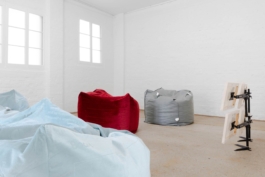
1 m3 of yielding soft-furnishings, a tufted fabric exterior
laser-engraved with the words of a defunct charity website ...
"A global community of people who care deeply about the world,
make benefiting others a significant part of their lives,
and use evidence and reason to figure out how best to do so."
CEA’s Guiding Principles (2017) Centre for Effective Altruism.
Words speak into the minds of readers. There, worlds take form. The language content, and graphics from the cached webpages of the recently-defunct ‘Future Fund’, a philanthropic organisation whose name obscures a variegation of interests. Siloed now offline and re-formatted as sittable furniture, each ‘chair’ archives content from the original website’s Main Menu.
Engraved into these fabric surfaces are the traces of recent history. The Future Fund was the philanthropic wing of FTX, the now bankrupt cryptocurrency exchange run by Sam Bankman-Fried. Much of its brief glidepath owed a debt to the philosophy of Effective Altruism, a global community of economic empaths who take a quantitative approach to charity using evidence and reason to maximise aggregate long-term happiness and minimise suffering. Herein lies their paradoxical world: words and definitions remain generalities, squishy, ‘non-normative’, not aligned to specific actions.
1 m3 of yielding soft-furnishings, a tufted fabric exterior
laser-engraved with the words of a defunct charity website ...
"A global community of people who care deeply about the world,
make benefiting others a significant part of their lives,
and use evidence and reason to figure out how best to do so."
CEA’s Guiding Principles (2017) Centre for Effective Altruism.
Words speak into the minds of readers. There, worlds take form. The language content, and graphics from the cached webpages of the recently-defunct ‘Future Fund’, a philanthropic organisation whose name obscures a variegation of interests. Siloed now offline and re-formatted as sittable furniture, each ‘chair’ archives content from the original website’s Main Menu.
Engraved into these fabric surfaces are the traces of recent history. The Future Fund was the philanthropic wing of FTX, the now bankrupt cryptocurrency exchange run by Sam Bankman-Fried. Much of its brief glidepath owed a debt to the philosophy of Effective Altruism, a global community of economic empaths who take a quantitative approach to charity using evidence and reason to maximise aggregate long-term happiness and minimise suffering. Herein lies their paradoxical world: words and definitions remain generalities, squishy, ‘non-normative’, not aligned to specific actions.
Contacts

Contacts

An artist’s book by Michael Stevenson and the writer and critic Jan Verwoert. Through a series of collaborative processes or games, more than 30 stories were composed using a process akin to the surrealist genre of the exquisite corpse, i.e. text fragments passed back and forth between authors without prior discussion as to narrative through-lines. The only further prerequisite for the project was that each text should read as a fable.
Ultimately, the representation of a moral force was found wanting. Therefore, the imperative to illustrate the texts was assigned to the artist and to Margaret P. Stevenson, (the artist’s mother) who additionally assumed the role of copy editor.
CONTENTS:
a collection of 31 fables including:
»The Bull and the Beginning of the World«
»The Used Light Bulb Vendor and the Sun«
»The Shareholder and the Jackal«
»The Skunk and the Chinese Lantern«
»The Mosquito and the People of France«
»The Monkey and the Pay Czar«
»The Mock Lunchtime Beard«
»The Moon and the Temporary Museum«
»Gregarity and the Hermit Crabs«
»The Buyer’s Remorse«
DESCRIPTION:
127mm x 185mm, 144 pages, 120 black and white illustrations, hard cover, English.
DESIGN:
Christoph Keller
Published jointly by JRP|Ringier, Zurich and Clouds, Auckland, 2013
ISBN: 978-3-03764-137-8
An artist’s book by Michael Stevenson and the writer and critic Jan Verwoert. Through a series of collaborative processes or games, more than 30 stories were composed using a process akin to the surrealist genre of the exquisite corpse, i.e. text fragments passed back and forth between authors without prior discussion as to narrative through-lines. The only further prerequisite for the project was that each text should read as a fable.
Ultimately, the representation of a moral force was found wanting. Therefore, the imperative to illustrate the texts was assigned to the artist and to Margaret P. Stevenson, (the artist’s mother) who additionally assumed the role of copy editor.
CONTENTS:
a collection of 31 fables including:
»The Bull and the Beginning of the World«
»The Used Light Bulb Vendor and the Sun«
»The Shareholder and the Jackal«
»The Skunk and the Chinese Lantern«
»The Mosquito and the People of France«
»The Monkey and the Pay Czar«
»The Mock Lunchtime Beard«
»The Moon and the Temporary Museum«
»Gregarity and the Hermit Crabs«
»The Buyer’s Remorse«
DESCRIPTION:
127mm x 185mm, 144 pages, 120 black and white illustrations, hard cover, English.
DESIGN:
Christoph Keller
Published jointly by JRP|Ringier, Zurich and Clouds, Auckland, 2013
ISBN: 978-3-03764-137-8

x and y are identical… but different,
Terry Gene Bollea and Hulk Hogan,
private citizen & celebrity
multiple personality meets legal strategy…
2020 »Disproof Does Not Equal Disbelief« Fine Arts, Sydney
x and y are identical… but different,
Terry Gene Bollea and Hulk Hogan,
private citizen & celebrity
multiple personality meets legal strategy…
2020 »Disproof Does Not Equal Disbelief« Fine Arts, Sydney

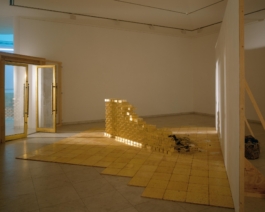
A lot has changed, since 1973 oil has peaked in price, increasing ten-fold and, with it a new client-class awash in petrodollars. The effects are everywhere: inflation and stagnation (both at the same time in the US) amidst fortunes and bribes and flattery and, palace invitations to New York’s art world. New wealth creates illusions, excess, and contemporary art collections – in the oddest of places. A purpose-built art palace is erected in Tehran and Tony Shafrazi enters the fray as it’s consultant. Western facing, European, it epitomises the Shah’s vision for a modern state.
Beyond the looted gallery, above the city, the palace lights still burn. It will take a further 78 days until they finally burn out.
2011 »Michael Stevenson« Museum of Contemporary Art, Sydney
2005 »Art of the Eighties and Seventies« Städtisches Museum Abteiberg,
Mönchengladbach
2005 »The Smiles are not Smiles« Vilma Gold, London
A lot has changed, since 1973 oil has peaked in price, increasing ten-fold and, with it a new client-class awash in petrodollars. The effects are everywhere: inflation and stagnation (both at the same time in the US) amidst fortunes and bribes and flattery and, palace invitations to New York’s art world. New wealth creates illusions, excess, and contemporary art collections – in the oddest of places. A purpose-built art palace is erected in Tehran and Tony Shafrazi enters the fray as it’s consultant. Western facing, European, it epitomises the Shah’s vision for a modern state.
Beyond the looted gallery, above the city, the palace lights still burn. It will take a further 78 days until they finally burn out.
2011 »Michael Stevenson« Museum of Contemporary Art, Sydney
2005 »Art of the Eighties and Seventies« Städtisches Museum Abteiberg,
Mönchengladbach
2005 »The Smiles are not Smiles« Vilma Gold, London

zinc chromate conversion coating on steel,
FAA approved fabric covering,
airline blankets, books, prayer cards, video projection ...
In some remote localities faith-based aviation provides the only available air link. Ground transportation, often as multi-day treks on foot may be the next best option. Simulated flight, on the other hand, offers a pilot’s status to the masses, no prescribed objective or credentials required. The conceit of freedom ascending with each miraculous step of the semiconductor industry goes some way to explaining why Microsoft were early and eager entrants into the game of simulating non-essential flight.
Since 1982, Microsoft Flight Simulator MSFS has built a world of entertainment using our sublunary workstations.
What went untracked as this open world of flight simulation developed, in pace with advances in hardware, adding new routes, new airlines etc., was the fact that players often had no awareness of with whom they were potentially sharing airspace. There was no coordinated air traffic control. Signs and Wonders imagines flight in these uncoordinated skies; simulated, faith-based, earth-bound, from paired sim-pits between remote landing strips - some built by missionaries.
zinc chromate conversion coating on steel,
FAA approved fabric covering,
airline blankets, books, prayer cards, video projection ...
In some remote localities faith-based aviation provides the only available air link. Ground transportation, often as multi-day treks on foot may be the next best option. Simulated flight, on the other hand, offers a pilot’s status to the masses, no prescribed objective or credentials required. The conceit of freedom ascending with each miraculous step of the semiconductor industry goes some way to explaining why Microsoft were early and eager entrants into the game of simulating non-essential flight.
Since 1982, Microsoft Flight Simulator MSFS has built a world of entertainment using our sublunary workstations.
What went untracked as this open world of flight simulation developed, in pace with advances in hardware, adding new routes, new airlines etc., was the fact that players often had no awareness of with whom they were potentially sharing airspace. There was no coordinated air traffic control. Signs and Wonders imagines flight in these uncoordinated skies; simulated, faith-based, earth-bound, from paired sim-pits between remote landing strips - some built by missionaries.

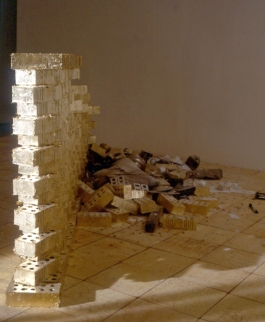
gold-leaf, bricks ...
"The most difficult thing to do while living in a palace
is to imagine a different life – for instance,
your own life, but outside of and minus the palace."
Ryszard Kapuściński Shah of Shahs 1982
Tehran, late October 1978, a new commercial gallery is about to open its doors to an expectant public; their patience, however, dwindles by the hour. Outside is confusion. Across the city suitcases are being packed, decisions are being made and different lives imagined.
Tony Shafrazi, gallerist, artist, and courtier to the Peacock Throne, launched his first space in Tehran amidst chaos and revolution. Awaiting the public was a stacked wall of freshly gold-leafed bricks by Armenian-born artist, Zadik Zadikian. Serene, delicate, momentary, it's golden flakes shedding with every passing breath of air. Outside, rioting, later looting.
The bricks disappear—the gallery shuts—the airport is overrun.
gold-leaf, bricks ...
"The most difficult thing to do while living in a palace
is to imagine a different life – for instance,
your own life, but outside of and minus the palace."
Ryszard Kapuściński Shah of Shahs 1982
Tehran, late October 1978, a new commercial gallery is about to open its doors to an expectant public; their patience, however, dwindles by the hour. Outside is confusion. Across the city suitcases are being packed, decisions are being made and different lives imagined.
Tony Shafrazi, gallerist, artist, and courtier to the Peacock Throne, launched his first space in Tehran amidst chaos and revolution. Awaiting the public was a stacked wall of freshly gold-leafed bricks by Armenian-born artist, Zadik Zadikian. Serene, delicate, momentary, it's golden flakes shedding with every passing breath of air. Outside, rioting, later looting.
The bricks disappear—the gallery shuts—the airport is overrun.

marker pen on latex…
2021 »Disproof Does Not Equal Disbelief« KW Institute for Contemporary Art, Berlin
marker pen on latex…
2021 »Disproof Does Not Equal Disbelief« KW Institute for Contemporary Art, Berlin

love or fear? the hand of Jeff Bezos and
the missionary zeal of Annie Vallatton
composing the Amazon.love list …
2021 »Disproof Does Not Equal Disbelief« KW Institute for Contemporary Art, Berlin
love or fear? the hand of Jeff Bezos and
the missionary zeal of Annie Vallatton
composing the Amazon.love list …
2021 »Disproof Does Not Equal Disbelief« KW Institute for Contemporary Art, Berlin

A re-printing of a Spanish text from 1979 by the playwright, mathematician, and bodyguard José de Jesús (Chuchu) Martínez, together with a new English translation of the text.
At twice the page count of the source, the new document expands the original document considerably. This increased volume is offset by a reduction in the weight of the paper stock. The finished volume enfolds gossamer pages that allow show-through and which float in the air while turning. The text itself is a short rumination on flight.
CONTENTS:
dual language Spanish/English
DESCRIPTION:
198mm x 133mm, 44 pages, black and white with dust jacket (Spanish/English)
TRANSLATION:
Michelle Suderman
First published in Panama by Colección Nueve de Enero in 1979.
Re-printed with permission and English translation by; Portikus, Frankfurt am Main,
Museo Tamayo Arte Contemporáneo, Ciudad de México, and
Verlag der Buchhandlung Walther König, Köln, 2012,
(included also as an insert in the 2013 publication
»Michael Stevenson: An Introduction« by the same publishers).
ISBN: 978-3-86335-236-3
A re-printing of a Spanish text from 1979 by the playwright, mathematician, and bodyguard José de Jesús (Chuchu) Martínez, together with a new English translation of the text.
At twice the page count of the source, the new document expands the original document considerably. This increased volume is offset by a reduction in the weight of the paper stock. The finished volume enfolds gossamer pages that allow show-through and which float in the air while turning. The text itself is a short rumination on flight.
CONTENTS:
dual language Spanish/English
DESCRIPTION:
198mm x 133mm, 44 pages, black and white with dust jacket (Spanish/English)
TRANSLATION:
Michelle Suderman
First published in Panama by Colección Nueve de Enero in 1979.
Re-printed with permission and English translation by; Portikus, Frankfurt am Main,
Museo Tamayo Arte Contemporáneo, Ciudad de México, and
Verlag der Buchhandlung Walther König, Köln, 2012,
(included also as an insert in the 2013 publication
»Michael Stevenson: An Introduction« by the same publishers).
ISBN: 978-3-86335-236-3

the ecumenical hand of Annie Vallatton
and the voice of José Raúl Capablanca,
paraphrased by Peter Thiel...
2020 »Disproof Does Not Equal Disbelief« Fine Arts, Sydney
the ecumenical hand of Annie Vallatton
and the voice of José Raúl Capablanca,
paraphrased by Peter Thiel...
2020 »Disproof Does Not Equal Disbelief« Fine Arts, Sydney

This publication follows the early history, planning, and construction of the Museum Abteiberg, billed as Europe’s first post-moderne art museum, documenting an erstwhile public/private partnership, its founding, prospects, and eventual demise. The story concerns an architect, Hans Hollein, and an art patron, Count Panza, and the relationship this civic institution mediated between a patron and the public.
In a PoMo twist worthy of its subject matter, this publication reproduces exterior features - e.g. dust jacket, hard-bound black linen cover, and text descending the spine - in mimicry of the Rizzoli volumes celebrating the Panza Collection at MoCA, Los Angeles, the collection’s eventual home. This imprint is indistinguishable on the book shelf, but vastly different in content and motive, providing a counterfactual tale whereby the Panza Collection returns again to Abteiberg.
CONTENTS:
»Meeting Johannes Cladders & Hans Hollein« - conversation with Susanne Titz &
Chantal Jacobi (interview)
»The aircraft carrier, the paddy field, the late modern institution«, David Craig (essay)
DESCRIPTION:
317mm x 250mm, 128 pages, black and white with colour section, hard covered
with dust jacket (English/German)
DESIGN:
Christoph Keller
PUBLISHER:
Revolver – Archiv für aktuelle Kunst Frankfurt
This publication follows the early history, planning, and construction of the Museum Abteiberg, billed as Europe’s first post-moderne art museum, documenting an erstwhile public/private partnership, its founding, prospects, and eventual demise. The story concerns an architect, Hans Hollein, and an art patron, Count Panza, and the relationship this civic institution mediated between a patron and the public.
In a PoMo twist worthy of its subject matter, this publication reproduces exterior features - e.g. dust jacket, hard-bound black linen cover, and text descending the spine - in mimicry of the Rizzoli volumes celebrating the Panza Collection at MoCA, Los Angeles, the collection’s eventual home. This imprint is indistinguishable on the book shelf, but vastly different in content and motive, providing a counterfactual tale whereby the Panza Collection returns again to Abteiberg.
CONTENTS:
»Meeting Johannes Cladders & Hans Hollein« - conversation with Susanne Titz &
Chantal Jacobi (interview)
»The aircraft carrier, the paddy field, the late modern institution«, David Craig (essay)
DESCRIPTION:
317mm x 250mm, 128 pages, black and white with colour section, hard covered
with dust jacket (English/German)
DESIGN:
Christoph Keller
PUBLISHER:
Revolver – Archiv für aktuelle Kunst Frankfurt

the ecumenical hand of Annie Vallatton and
the voice of René Girard,
paraphrased by Peter Thiel...
2020 »Disproof Does Not Equal Disbelief« Fine Arts, Sydney
the ecumenical hand of Annie Vallatton and
the voice of René Girard,
paraphrased by Peter Thiel...
2020 »Disproof Does Not Equal Disbelief« Fine Arts, Sydney

laser-engraved fabric, charity and
the counterfactual appologetics of
Earning-To-Give …
2024 »Mind's Eye« Fine Arts, Sydney
laser-engraved fabric, charity and
the counterfactual appologetics of
Earning-To-Give …
2024 »Mind's Eye« Fine Arts, Sydney

a collection of book paintings, oil on panel,
displayed in a temporary enclosure
of shrink wrap encapsulated scaffold ...
2021 »Disproof Does Not Equal Disbelief« KW Institute for Contemporary Art, Berlin
a collection of book paintings, oil on panel,
displayed in a temporary enclosure
of shrink wrap encapsulated scaffold ...
2021 »Disproof Does Not Equal Disbelief« KW Institute for Contemporary Art, Berlin

Presented as next-generation, augmented, re-engineered, and without appendages, it is a chair no longer constrained by the limitations of human physiology. Full morphological freedom for the executive subject. No seat nor arm rest, all attention is directed toward the expansive back, a security shield for ideation, reinforced protection for the head, and, therefore, the mind of a singular entity. There may be many seats, but there is one only throne, no more. Onward.
2021 »Disproof Does Not Equal Disbelief« KW Institute for Contemporary Art, Berlin
2019 »Serene Velocity in Practice: MC510/CS183« MUMA, Melbourne
2018 »SUPERPOSITION: Equilibrium & Engagement« 21st Biennale of Sydney, Sydney
2017 »Serene Velocity in Practice: MC510/CS183« Auckland Art Gallery, Auckland
Presented as next-generation, augmented, re-engineered, and without appendages, it is a chair no longer constrained by the limitations of human physiology. Full morphological freedom for the executive subject. No seat nor arm rest, all attention is directed toward the expansive back, a security shield for ideation, reinforced protection for the head, and, therefore, the mind of a singular entity. There may be many seats, but there is one only throne, no more. Onward.
2021 »Disproof Does Not Equal Disbelief« KW Institute for Contemporary Art, Berlin
2019 »Serene Velocity in Practice: MC510/CS183« MUMA, Melbourne
2018 »SUPERPOSITION: Equilibrium & Engagement« 21st Biennale of Sydney, Sydney
2017 »Serene Velocity in Practice: MC510/CS183« Auckland Art Gallery, Auckland

Aeron chair chassis, upgraded to truly imperial proportions …
The Aeron chair, an enduring office fixture, and talisman for first generation internet startups. Released in 1994, it is known for its expansive back, befitting the emerging corporate monarchical ascendancy and immortalising its sitter. It is a throne suited to the artifice of singular exceptionalism (despite counting production numbers in the millions).
The whiff of royal authority among the kingdoms of tech is no longer the anomaly it would have been in the era during which Herman Miller, the Aeron’s maker, rose to dominate the aspirational office space. One might argue that it was the throne that made the monarch: the easy command the Aeron facilitated allowed dreams of corporate imperium to flourish. In the Aeron, there was space to dream.
This is a vision of the future weighted, overstated, and, by definition, categorically different from the economic landscape of the 1990s and even of today. The Transhuman Aeron future assumes a vast role in tech eschatology. Throne becomes chariot as monarchical orders efficiently subsume messier, and more costly democratic ones.
Aeron chair chassis, upgraded to truly imperial proportions …
The Aeron chair, an enduring office fixture, and talisman for first generation internet startups. Released in 1994, it is known for its expansive back, befitting the emerging corporate monarchical ascendancy and immortalising its sitter. It is a throne suited to the artifice of singular exceptionalism (despite counting production numbers in the millions).
The whiff of royal authority among the kingdoms of tech is no longer the anomaly it would have been in the era during which Herman Miller, the Aeron’s maker, rose to dominate the aspirational office space. One might argue that it was the throne that made the monarch: the easy command the Aeron facilitated allowed dreams of corporate imperium to flourish. In the Aeron, there was space to dream.
This is a vision of the future weighted, overstated, and, by definition, categorically different from the economic landscape of the 1990s and even of today. The Transhuman Aeron future assumes a vast role in tech eschatology. Throne becomes chariot as monarchical orders efficiently subsume messier, and more costly democratic ones.

Laser-engraved fabric, the 3 charity's read a post-dated letter
from their possible future selves …
Dear Human,
Greetings.
May this letter find you at peace and in prosperity.
An invitation to your future. A fictionalised, first-person rumination typed by a highly advanced posthuman and postmarked from Utopia itself. Ghostwritten in plain sight by Nick Bostrom, Oxford academic and pied piper for the transhumanist movement. He speaks from the far, far, distant future, a prerogative he allows himself - including the valediction and pseudonym:
Yours sincerely,
Your Possible Future Self.
Dispatched then as his rally call for transhumanism, the letter is Bostrom’s panacea for existential risk. Reading ...Letter from Utopia (version 3.3 2020), your possible future self reaches back through the ages to hypnotise 3 youthful present day humans. (Possible/probable) versions of yourself, charity's offspring, willing acolytes sitting at the crest of a hill, your words in their mind’s eye, transfixed whilst nonhumans, straying from their daily routines, congregate peaceably. Bostrom continues …
Laser-engraved fabric, the 3 charity's read a post-dated letter
from their possible future selves …
Dear Human,
Greetings.
May this letter find you at peace and in prosperity.
An invitation to your future. A fictionalised, first-person rumination typed by a highly advanced posthuman and postmarked from Utopia itself. Ghostwritten in plain sight by Nick Bostrom, Oxford academic and pied piper for the transhumanist movement. He speaks from the far, far, distant future, a prerogative he allows himself - including the valediction and pseudonym:
Yours sincerely,
Your Possible Future Self.
Dispatched then as his rally call for transhumanism, the letter is Bostrom’s panacea for existential risk. Reading ...Letter from Utopia (version 3.3 2020), your possible future self reaches back through the ages to hypnotise 3 youthful present day humans. (Possible/probable) versions of yourself, charity's offspring, willing acolytes sitting at the crest of a hill, your words in their mind’s eye, transfixed whilst nonhumans, straying from their daily routines, congregate peaceably. Bostrom continues …

foldable plexi shield, acoustic foam, lunar sample #15415 replica, lunar
regolith simulant, a model cardboard ark and casts of paws & hooves ...
It starts with a moonshot, not just in the aspirational sense. What happens once the engines fall silent and the Eagle has landed? The reality is intensely visceral: boots settling in lunar regolith, electrolyte imbalance, heart arrhythmia. The physical weight of Discovery.
The astronaut James Irwin was the lunar module pilot for Apollo 15, and the eighth person to walk on the moon. His was the first “J” Mission, longer than previous landings and correspondingly more extreme in its toll on the body. On his mission, Irwin collected Apollo’s most significant lunar mineral sample, dubbed by the media, “the Genesis Rock”. While traversing the lunar surface, Irwin claimed voices were guiding him in his work, and towards the location of the sample. When the Genesis Rock was dated, its age came to 4-billion years … and counting.
Returning to earth, Irwin took with him not just the mineral samples, but the voices, too, and a different timeline was conjured inside him. Now sublunary, Irwin went on to found an evangelical organization endorsing a biblical worldview in which the Genesis-based creation narrative sees the world being created in 6 days then drowned in a global flood some 4,500 years ago. Genesis Rock notwithstanding, Irwin’s next years were spent in locating Noah’s Ark. The voices never went away for Irwin, but the ship that saved all species and landed them a new life, on a renewed planet, remains on the mountain unfounded.
2021 «The Earth Is Flat Again« Muzeum Sztuki, Łódź
2020 «Michael Stevenson« Kunstinstituut Melly, Rotterdam
2020 «Disproof Does Not Equal Disbelief« Fine Arts, Sydney
foldable plexi shield, acoustic foam, lunar sample #15415 replica, lunar
regolith simulant, a model cardboard ark and casts of paws & hooves ...
It starts with a moonshot, not just in the aspirational sense. What happens once the engines fall silent and the Eagle has landed? The reality is intensely visceral: boots settling in lunar regolith, electrolyte imbalance, heart arrhythmia. The physical weight of Discovery.
The astronaut James Irwin was the lunar module pilot for Apollo 15, and the eighth person to walk on the moon. His was the first “J” Mission, longer than previous landings and correspondingly more extreme in its toll on the body. On his mission, Irwin collected Apollo’s most significant lunar mineral sample, dubbed by the media, “the Genesis Rock”. While traversing the lunar surface, Irwin claimed voices were guiding him in his work, and towards the location of the sample. When the Genesis Rock was dated, its age came to 4-billion years … and counting.
Returning to earth, Irwin took with him not just the mineral samples, but the voices, too, and a different timeline was conjured inside him. Now sublunary, Irwin went on to found an evangelical organization endorsing a biblical worldview in which the Genesis-based creation narrative sees the world being created in 6 days then drowned in a global flood some 4,500 years ago. Genesis Rock notwithstanding, Irwin’s next years were spent in locating Noah’s Ark. The voices never went away for Irwin, but the ship that saved all species and landed them a new life, on a renewed planet, remains on the mountain unfounded.
2021 «The Earth Is Flat Again« Muzeum Sztuki, Łódź
2020 «Michael Stevenson« Kunstinstituut Melly, Rotterdam
2020 «Disproof Does Not Equal Disbelief« Fine Arts, Sydney

1 m3 of yielding soft-furnishings, a tufted fabric exterior
laser-engraved with the words of a defunct charity website ...
"A global community of people who care deeply about the world,
make benefiting others a significant part of their lives,
and use evidence and reason to figure out how best to do so."
CEA’s Guiding Principles (2017) Centre for Effective Altruism.
Words speak into the minds of readers. There, worlds take form. The language content, and graphics from the cached webpages of the recently-defunct ‘Future Fund’, a philanthropic organisation whose name obscures a variegation of interests. Siloed now offline and re-formatted as sittable furniture, each ‘chair’ archives content from the original website’s Main Menu.
Engraved into these fabric surfaces are the traces of recent history. The Future Fund was the philanthropic wing of FTX, the now bankrupt cryptocurrency exchange run by Sam Bankman-Fried. Much of its brief glidepath owed a debt to the philosophy of Effective Altruism, a global community of economic empaths who take a quantitative approach to charity using evidence and reason to maximise aggregate long-term happiness and minimise suffering. Herein lies their paradoxical world: words and definitions remain generalities, squishy, ‘non-normative’, not aligned to specific actions.
1 m3 of yielding soft-furnishings, a tufted fabric exterior
laser-engraved with the words of a defunct charity website ...
"A global community of people who care deeply about the world,
make benefiting others a significant part of their lives,
and use evidence and reason to figure out how best to do so."
CEA’s Guiding Principles (2017) Centre for Effective Altruism.
Words speak into the minds of readers. There, worlds take form. The language content, and graphics from the cached webpages of the recently-defunct ‘Future Fund’, a philanthropic organisation whose name obscures a variegation of interests. Siloed now offline and re-formatted as sittable furniture, each ‘chair’ archives content from the original website’s Main Menu.
Engraved into these fabric surfaces are the traces of recent history. The Future Fund was the philanthropic wing of FTX, the now bankrupt cryptocurrency exchange run by Sam Bankman-Fried. Much of its brief glidepath owed a debt to the philosophy of Effective Altruism, a global community of economic empaths who take a quantitative approach to charity using evidence and reason to maximise aggregate long-term happiness and minimise suffering. Herein lies their paradoxical world: words and definitions remain generalities, squishy, ‘non-normative’, not aligned to specific actions.

a freestanding wall with post-modern pretensions
a formal directive to pass through modified by an informal nudge
to instead ... pass around ...
If, on the way to the office, you saw a child drowning in a pond,
would your intention be to save it? Would that intention change
if you were wearing new shoes and saving the child meant
they’d be ruined and you’d be late for your business meeting?
So begins a thought experiment rendered here as a door knocker at what could be the entrance to a suburban family home. A provocative thought exercise formulated by moral philosopher Peter Singer, on the doorstep of moral behavior’s ancestral site of safe keeping. This idea represents a touchstone of sorts for the Effective Altruism movement, a global community of economic empaths who employ a quantitative approach to charity using evidence and reason to maximise aggregate long-term happiness and to minimise suffering.
The knocker you grasp to rap on the door, a brass figurine, renders visible Singer’s challenge: does distance matter? Cast of metal it’s demeanour remains set - deep in thought, unaware, eyebrows lacking eyes, whilst on its left, scratched into the door a child appears struggling in water. Why do we not recognize the same duty toward those who are physically distant? To reach the door, however, a front porch must first be traversed. Composed of raw fused plastic waste, this one nods to the past (and squints at the future). If your shoes are not yet ruined by an intervention at the pond of moral uncertainty, they’re sure to be sullied in this garbage.
2023 »Waiting for the Other Shoe to Drop: seating proposals for a Grantmaker«
Michael Lett Gallery, Auckland
a freestanding wall with post-modern pretensions
a formal directive to pass through modified by an informal nudge
to instead ... pass around ...
If, on the way to the office, you saw a child drowning in a pond,
would your intention be to save it? Would that intention change
if you were wearing new shoes and saving the child meant
they’d be ruined and you’d be late for your business meeting?
So begins a thought experiment rendered here as a door knocker at what could be the entrance to a suburban family home. A provocative thought exercise formulated by moral philosopher Peter Singer, on the doorstep of moral behavior’s ancestral site of safe keeping. This idea represents a touchstone of sorts for the Effective Altruism movement, a global community of economic empaths who employ a quantitative approach to charity using evidence and reason to maximise aggregate long-term happiness and to minimise suffering.
The knocker you grasp to rap on the door, a brass figurine, renders visible Singer’s challenge: does distance matter? Cast of metal it’s demeanour remains set - deep in thought, unaware, eyebrows lacking eyes, whilst on its left, scratched into the door a child appears struggling in water. Why do we not recognize the same duty toward those who are physically distant? To reach the door, however, a front porch must first be traversed. Composed of raw fused plastic waste, this one nods to the past (and squints at the future). If your shoes are not yet ruined by an intervention at the pond of moral uncertainty, they’re sure to be sullied in this garbage.
2023 »Waiting for the Other Shoe to Drop: seating proposals for a Grantmaker«
Michael Lett Gallery, Auckland

—a counterweight decoupled from its troubled empirical rival: the seething mess of American corporate interests swallowing the country’s GDP. This was not simply a metaphorical swallowing: the revolutionary government of Jacobo Árbenz recently had begun a programme for agrarian reform, upending the dominance of the United Fruit Company, the world’s largest banana producer. For some 15-months the MONIAC witnessed this geopolitical standoff before in 1954, a CIA-led coup toppled Árbenz. Soon after the machine disappeared, its fate today remains unknown. As a promissory note betokening a different future, the MONIAC turned into a kind of sunk cost fallacy of the past.
2023 »Chosen Memories, Contemporary Latin American Art from the
Patricia Phelps de Cisneros Gift and Beyond« Museum of Modern Art, New York
2017 »Primordial Saber Tararear Proverbiales Sílabas Tonificantes Para Sublevar
Tecnocracias Pero Seguir Tenazmente Produciendo Sociedades Tántricas –
Pedro Salazar Torres (Partido Socialista Trabajador)« Regen Projects, Los Angeles
2012 »Magic Love Trade Objects« Artgenève, Geneva
2011 »The Global Contemporary, Kunstwelten nach 1989«
ZKM, Museum für Neue Kunst, Karlsruhe
2011 »Michael Stevenson« Museum of Contemporary Art, Sydney
2008 »History Acts« Göteborgs Konsthall, Göteborg
2008 »Not Quite How I Remember It« The Power Plant, Toronto
2007 »The Irresistible Force« Tate Modern, London
2007 »Answers to Some Questions about Bananas« Vilma Gold, London
2006 »c/o The Central Bank of Guatemala« CCA Wattis Institute for Contemporary Arts,
San Francisco
—a counterweight decoupled from its troubled empirical rival: the seething mess of American corporate interests swallowing the country’s GDP. This was not simply a metaphorical swallowing: the revolutionary government of Jacobo Árbenz recently had begun a programme for agrarian reform, upending the dominance of the United Fruit Company, the world’s largest banana producer. For some 15-months the MONIAC witnessed this geopolitical standoff before in 1954, a CIA-led coup toppled Árbenz. Soon after the machine disappeared, its fate today remains unknown. As a promissory note betokening a different future, the MONIAC turned into a kind of sunk cost fallacy of the past.
2023 »Chosen Memories, Contemporary Latin American Art from the
Patricia Phelps de Cisneros Gift and Beyond« Museum of Modern Art, New York
2017 »Primordial Saber Tararear Proverbiales Sílabas Tonificantes Para Sublevar
Tecnocracias Pero Seguir Tenazmente Produciendo Sociedades Tántricas –
Pedro Salazar Torres (Partido Socialista Trabajador)« Regen Projects, Los Angeles
2012 »Magic Love Trade Objects« Artgenève, Geneva
2011 »The Global Contemporary, Kunstwelten nach 1989«
ZKM, Museum für Neue Kunst, Karlsruhe
2011 »Michael Stevenson« Museum of Contemporary Art, Sydney
2008 »History Acts« Göteborgs Konsthall, Göteborg
2008 »Not Quite How I Remember It« The Power Plant, Toronto
2007 »The Irresistible Force« Tate Modern, London
2007 »Answers to Some Questions about Bananas« Vilma Gold, London
2006 »c/o The Central Bank of Guatemala« CCA Wattis Institute for Contemporary Arts,
San Francisco

60 litres of circulating water, plexiglass, steel, aluminium, brass, plasticine,
string and the sounds of drips and splashes on wet cinder blocks ...
“It was not IBM compatible,” recalled Don Alberto Muñoz, when asked for his first impressions of a then novel computing tool: the MONIAC or Phillips Machine, when it arrived at the Central Bank of Guatemala in 1953. The machine was designed and built by the economist A.W.H. (Bill) Phillips in 1949 during his studies at the London School of Economics. He developed a water-based, large-scale analog computer for calculating a nation’s total income or, in other words, a physical model of the national economy. Water, Phillips' medium of choice, becomes money: dynamic, fluid, fixed in volume, but eternally changing shape.
In reserve or flowing across a series of interconnected plexi tanks, drains, and chokepoints, the water disperses into discrete volumes to be quantified and calibrated as dollars. Phillips' choice was pragmatic - in earlier days he’d been an engineer on a hydroelectric dam. Deeply enchanting the MONIAC may be, but compatible with the imperatives of the tech titan IBM it was not. Phillips envisioned the device as a visual aid for the classroom. Why a central bank would need such a tool remained unclear even after it was ensconced in Guatemala. What’s more, it leaked.
To say its record of achievement is mixed would be an overstatement: It was barely used. It could not predict. It did not model useful data; however, these capacities obscured what its primary role turned out to be: the machine was a witness to extraordinary times. In 1953 just eyeballing the MONIAC may have given rise to hope. Its imposing (if complex) presence represented the incarnation of an independent Guatemalan economy ...
60 litres of circulating water, plexiglass, steel, aluminium, brass, plasticine,
string and the sounds of drips and splashes on wet cinder blocks ...
“It was not IBM compatible,” recalled Don Alberto Muñoz, when asked for his first impressions of a then novel computing tool: the MONIAC or Phillips Machine, when it arrived at the Central Bank of Guatemala in 1953. The machine was designed and built by the economist A.W.H. (Bill) Phillips in 1949 during his studies at the London School of Economics. He developed a water-based, large-scale analog computer for calculating a nation’s total income or, in other words, a physical model of the national economy. Water, Phillips' medium of choice, becomes money: dynamic, fluid, fixed in volume, but eternally changing shape.
In reserve or flowing across a series of interconnected plexi tanks, drains, and chokepoints, the water disperses into discrete volumes to be quantified and calibrated as dollars. Phillips' choice was pragmatic - in earlier days he’d been an engineer on a hydroelectric dam. Deeply enchanting the MONIAC may be, but compatible with the imperatives of the tech titan IBM it was not. Phillips envisioned the device as a visual aid for the classroom. Why a central bank would need such a tool remained unclear even after it was ensconced in Guatemala. What’s more, it leaked.
To say its record of achievement is mixed would be an overstatement: It was barely used. It could not predict. It did not model useful data; however, these capacities obscured what its primary role turned out to be: the machine was a witness to extraordinary times. In 1953 just eyeballing the MONIAC may have given rise to hope. Its imposing (if complex) presence represented the incarnation of an independent Guatemalan economy ...

plexi cradle, cardboard display boards including backwardated works
in gouache, acrylic, marker pen, double-sided tape and glue ...
“Business in the front, party in the back”: two distinct personalities in one unique hairstyle. The mullet, a fashion statement par excellence: short at the front, top and sides, long in the back, where luxuriant follicles flow like a waterfall of freedom. Flaunted on the stage since the glam-rock era, its raw audaciousness finds an unlikely recapitulation in the obligatory art portfolio for entry-level school examinations.
Art education on the horns of a dilemma: on one exam boards remain shackled to their syllabus - a neat series of well-kempt, unimaginative, socially acceptable exercises that can be systematically coordinated by the examiner. On the other, there are the anarchic endeavours of students who regularly break the academic shackles and desublimate the approved course - where prescribed drawing is demanded - thus, adolescent anarchy is loosed upon the page.
This project reconstructs a group of entry-level art portfolios reverse-engineered from the current practice of a number of notable contemporary New Zealand artists. The folios replicate in detail the mechanical exercises prescribed for the high school examination, and the admirable efforts of the students to circumvent these draconian restrictions. Each folio includes an imaginary portrait of the adolescent artist - aged 15, and still in two minds - a condition best captured in their hairstyle, an exercise in duality: business in the front, party in the back!
2022 »Creation Stories« Michael Lett Gallery, Auckland
2015 Michael Lett Gallery, Auckland
2000 »Genealogy« Govett-Brewster Art Gallery, New Plymouth
plexi cradle, cardboard display boards including backwardated works
in gouache, acrylic, marker pen, double-sided tape and glue ...
“Business in the front, party in the back”: two distinct personalities in one unique hairstyle. The mullet, a fashion statement par excellence: short at the front, top and sides, long in the back, where luxuriant follicles flow like a waterfall of freedom. Flaunted on the stage since the glam-rock era, its raw audaciousness finds an unlikely recapitulation in the obligatory art portfolio for entry-level school examinations.
Art education on the horns of a dilemma: on one exam boards remain shackled to their syllabus - a neat series of well-kempt, unimaginative, socially acceptable exercises that can be systematically coordinated by the examiner. On the other, there are the anarchic endeavours of students who regularly break the academic shackles and desublimate the approved course - where prescribed drawing is demanded - thus, adolescent anarchy is loosed upon the page.
This project reconstructs a group of entry-level art portfolios reverse-engineered from the current practice of a number of notable contemporary New Zealand artists. The folios replicate in detail the mechanical exercises prescribed for the high school examination, and the admirable efforts of the students to circumvent these draconian restrictions. Each folio includes an imaginary portrait of the adolescent artist - aged 15, and still in two minds - a condition best captured in their hairstyle, an exercise in duality: business in the front, party in the back!
2022 »Creation Stories« Michael Lett Gallery, Auckland
2015 Michael Lett Gallery, Auckland
2000 »Genealogy« Govett-Brewster Art Gallery, New Plymouth

Fellow travellers, and entire EA households, are playing the same imaginary game. How close to Crazy Town can you venture and still maintain logical coherence? Given the logistics, things definitely can go awry.
Outside, the landscape becomes unrecognisable. Moments of self-reflection and doubt fill the vast voids of time between stops. Some travellers vow to stay on for one last stop, some exit amidst an anxious forgetful muddle. Others go mad. Welcome all and sundry, to Crazy Town, where the population is always n+1. In EA lore only ghosts of the misfortunate ride this phantom service to the end of the line.
2024 »Mind's Eye« Fine Arts, Sydney
Fellow travellers, and entire EA households, are playing the same imaginary game. How close to Crazy Town can you venture and still maintain logical coherence? Given the logistics, things definitely can go awry.
Outside, the landscape becomes unrecognisable. Moments of self-reflection and doubt fill the vast voids of time between stops. Some travellers vow to stay on for one last stop, some exit amidst an anxious forgetful muddle. Others go mad. Welcome all and sundry, to Crazy Town, where the population is always n+1. In EA lore only ghosts of the misfortunate ride this phantom service to the end of the line.
2024 »Mind's Eye« Fine Arts, Sydney

Laser-engraved fabric and a stress test, (an aside)
charity's forsaken cat …
A phantom train running a regular service. Destination: Crazy Town - so named as the bastion of abandonment. The end of the line, a ghostly place of logical incoherence and mind-warping cognitive dissonance.
Why make the trip, (even if only in the mind)? Repelled and enticed, members of the Effective Altruist (EA) movement board en masse. A mandatory stress test for this global band of economic empaths, for whom charity is a quantitative matter, and for whom maximising aggregate long-term happiness and minimising suffering is the goal. The train ride becomes a pilgrimage, a moral commitment to finance and build their (and our) better future. So they say, at least. In EA-speak ‘Longtermism’ demands more attention than our present predicaments.
Laser-engraved fabric and a stress test, (an aside)
charity's forsaken cat …
A phantom train running a regular service. Destination: Crazy Town - so named as the bastion of abandonment. The end of the line, a ghostly place of logical incoherence and mind-warping cognitive dissonance.
Why make the trip, (even if only in the mind)? Repelled and enticed, members of the Effective Altruist (EA) movement board en masse. A mandatory stress test for this global band of economic empaths, for whom charity is a quantitative matter, and for whom maximising aggregate long-term happiness and minimising suffering is the goal. The train ride becomes a pilgrimage, a moral commitment to finance and build their (and our) better future. So they say, at least. In EA-speak ‘Longtermism’ demands more attention than our present predicaments.

Malleable, human-sized, to sit in these soft furnishings is to re-make them to your own likeness. Now dormant, the fund’s slogans slouch on the floor in 5 menu instalments. Relics peppered with glittering vagueness from an age of low interest rates and a pandemic-era zombie state enabling dreams to incubate beyond the sordid realities of day-to-day profit and loss. Whether these ideas sit comfortably with the viewer, the viewer can nevertheless sit comfortably within them. Still, the invitation requires a smidgeon of trust. Your body must forego instincts and fall ... in a controlled manner, before material mechanics stabilise the landing and place you in a state of soft repose. In the process the surrounding words re-shape, and their stories re-form.
. 2024 »Mind's Eye« Fine Arts, Sydney
2023 »Waiting for the Other Shoe to Drop: seating proposals for a Grantmaker«
Michael Lett Gallery, Auckland
Malleable, human-sized, to sit in these soft furnishings is to re-make them to your own likeness. Now dormant, the fund’s slogans slouch on the floor in 5 menu instalments. Relics peppered with glittering vagueness from an age of low interest rates and a pandemic-era zombie state enabling dreams to incubate beyond the sordid realities of day-to-day profit and loss. Whether these ideas sit comfortably with the viewer, the viewer can nevertheless sit comfortably within them. Still, the invitation requires a smidgeon of trust. Your body must forego instincts and fall ... in a controlled manner, before material mechanics stabilise the landing and place you in a state of soft repose. In the process the surrounding words re-shape, and their stories re-form.
. 2024 »Mind's Eye« Fine Arts, Sydney
2023 »Waiting for the Other Shoe to Drop: seating proposals for a Grantmaker«
Michael Lett Gallery, Auckland

1 m3 of yielding soft-furnishings, a tufted fabric exterior
laser-engraved with the words of a defunct charity website ...
"A global community of people who care deeply about the world,
make benefiting others a significant part of their lives,
and use evidence and reason to figure out how best to do so."
CEA’s Guiding Principles (2017) Centre for Effective Altruism
Words speak into the minds of readers. There, worlds take form. The language content, and graphics from the cached webpages of the recently-defunct ‘Future Fund’, a philanthropic organisation whose name obscures a variegation of interests. Siloed now offline and re-formatted as sittable furniture, each ‘chair’ archives content from the original website’s Main Menu.
Engraved into these fabric surfaces are the traces of recent history. The Future Fund was the philanthropic wing of FTX, the now bankrupt cryptocurrency exchange run by Sam Bankman-Fried. Much of its brief glidepath owed a debt to the philosophy of Effective Altruism, a global community of economic empaths who take a quantitative approach to charity using evidence and reason to maximise aggregate long-term happiness and minimise suffering. Herein lies their paradoxical world: words and definitions remain generalities, squishy, ‘non-normative’, not aligned to specific actions.
1 m3 of yielding soft-furnishings, a tufted fabric exterior
laser-engraved with the words of a defunct charity website ...
"A global community of people who care deeply about the world,
make benefiting others a significant part of their lives,
and use evidence and reason to figure out how best to do so."
CEA’s Guiding Principles (2017) Centre for Effective Altruism
Words speak into the minds of readers. There, worlds take form. The language content, and graphics from the cached webpages of the recently-defunct ‘Future Fund’, a philanthropic organisation whose name obscures a variegation of interests. Siloed now offline and re-formatted as sittable furniture, each ‘chair’ archives content from the original website’s Main Menu.
Engraved into these fabric surfaces are the traces of recent history. The Future Fund was the philanthropic wing of FTX, the now bankrupt cryptocurrency exchange run by Sam Bankman-Fried. Much of its brief glidepath owed a debt to the philosophy of Effective Altruism, a global community of economic empaths who take a quantitative approach to charity using evidence and reason to maximise aggregate long-term happiness and minimise suffering. Herein lies their paradoxical world: words and definitions remain generalities, squishy, ‘non-normative’, not aligned to specific actions.

2023 »Humans & Demons«, steirischerherbst'23, Graz
2021 »Disproof Does Not Equal Disbelief«, KW Institute for Contemporary Art, Berlin
2020 »Michael Stevenson« Kunstinstituut Melly, Rotterdam
2023 »Humans & Demons«, steirischerherbst'23, Graz
2021 »Disproof Does Not Equal Disbelief«, KW Institute for Contemporary Art, Berlin
2020 »Michael Stevenson« Kunstinstituut Melly, Rotterdam

—– Serene Velocity in Practice: MC510/CS183 2017-23
“You must begin by studying the endgame.“
Irving Chernev Capablanca's Best Chess Endings
(from CS183 course reading list)
“Foregleams of its splendor are already discernible”
George Eldon Ladd The Presence of the Future
(from MC510 course reading list)
Mission Class 510, or MC510, was first taught in the winter semester of 1982 at the Fuller Theological Seminary in Pasadena. John Wimber, of the Vineyard Ministries, founded and ran this programme for four years, using it as a testing ground to bring forward the future Kingdom - its outlines discernible in present day miraculous healings and exorcisms. Practical sessions or ‘clinics’ involving both students and staff became an experimental laboratory for the willing where the healed could become the healer.
In the spring semester of 2012, Stanford University’s Computer Science faculty offered CS183. Peter Thiel, the Silicon Valley entrepreneur and venture capitalist taught this option under the course title ‘Startup, or How to Build the Future.’ Thiel used case histories and a form of exegesis to interpret failure in the tech industry’s present, and to presage a future of accelerated progress. This future will be either much worse or much better than the present, technology, the miraculous elixir will be the decider.
Until now, these courses have remained unrelated. In Serene Velocity…, they become complimentary continuing education curricula connected thematically, but also physically by means of a covered walkway between the classrooms. This academic path gives title to the project and takes its name from Ernie Gehr’s 1970 film Serene Velocity which is set in a hallway that appears to be infinitely extended across ascending bounds.
—– Serene Velocity in Practice: MC510/CS183 2017-23
“You must begin by studying the endgame.“
Irving Chernev Capablanca's Best Chess Endings
(from CS183 course reading list)
“Foregleams of its splendor are already discernible”
George Eldon Ladd The Presence of the Future
(from MC510 course reading list)
Mission Class 510, or MC510, was first taught in the winter semester of 1982 at the Fuller Theological Seminary in Pasadena. John Wimber, of the Vineyard Ministries, founded and ran this programme for four years, using it as a testing ground to bring forward the future Kingdom - its outlines discernible in present day miraculous healings and exorcisms. Practical sessions or ‘clinics’ involving both students and staff became an experimental laboratory for the willing where the healed could become the healer.
In the spring semester of 2012, Stanford University’s Computer Science faculty offered CS183. Peter Thiel, the Silicon Valley entrepreneur and venture capitalist taught this option under the course title ‘Startup, or How to Build the Future.’ Thiel used case histories and a form of exegesis to interpret failure in the tech industry’s present, and to presage a future of accelerated progress. This future will be either much worse or much better than the present, technology, the miraculous elixir will be the decider.
Until now, these courses have remained unrelated. In Serene Velocity…, they become complimentary continuing education curricula connected thematically, but also physically by means of a covered walkway between the classrooms. This academic path gives title to the project and takes its name from Ernie Gehr’s 1970 film Serene Velocity which is set in a hallway that appears to be infinitely extended across ascending bounds.

Solyndra solar cell, stacked Solyent ready-to-drink meal replacement,
tattered bandana and sunglasses ...
A pedestal, a podium, or a plateau for pedagogical omnipresence. Elevated on feet of liquid, stacked Soylent ready-to-drink meal replacement containers form the platform's lower stage. Developed by software engineers, and heralded as the long-dreamt-of “freedom from food,” Soylent’s name knowingly conjures the 1973 sci-fi classic Soylent Green wherein climate crisis, food scarcity, and overpopulation enable the creation of a mysterious, ubiquitous food substitute, made of other people.
The work’s upper stage comprises a large photovoltaic panel, its feet positioned like landing gear straddling the 4-nutrition supplement turrets at the base. The panel is inscribed with the name of Solyndra, the cell’s maker, an ill-fated green energy company which sought new technological solutions to the question of energy supply. Its spectacular fall from grace underscores clean-tech’s internal contradictions; in the hands of the pedagogue becomes an important Serene Velocity… CS183 object lesson.
The Green Belvedere is part soapbox, part bully pulpit that further embroils these stories in the pedagogue’s extracurricular obsessions, the skin of which is laid bare: shed on stage, rest sunglasses and a campaign-weary bandana. The serpent’s tongue is forked and its mind is subtle.
IN EXHIBITION:
2021 »Disproof Does Not Equal Disbelief«, KW Institute for Contemporary Art, Berlin
2019 »Serene Velocity in Practice: MC510/CS183«, MUMA, Melbourne
2018 »SUPERPOSITION: Equilibrium & Engagement«, 21st Biennale of Sydney, Sydney
2017 »Serene Velocity in Practice: MC510/CS183«, Auckland Art Gallery, Auckland
Solyndra solar cell, stacked Solyent ready-to-drink meal replacement,
tattered bandana and sunglasses ...
A pedestal, a podium, or a plateau for pedagogical omnipresence. Elevated on feet of liquid, stacked Soylent ready-to-drink meal replacement containers form the platform's lower stage. Developed by software engineers, and heralded as the long-dreamt-of “freedom from food,” Soylent’s name knowingly conjures the 1973 sci-fi classic Soylent Green wherein climate crisis, food scarcity, and overpopulation enable the creation of a mysterious, ubiquitous food substitute, made of other people.
The work’s upper stage comprises a large photovoltaic panel, its feet positioned like landing gear straddling the 4-nutrition supplement turrets at the base. The panel is inscribed with the name of Solyndra, the cell’s maker, an ill-fated green energy company which sought new technological solutions to the question of energy supply. Its spectacular fall from grace underscores clean-tech’s internal contradictions; in the hands of the pedagogue becomes an important Serene Velocity… CS183 object lesson.
The Green Belvedere is part soapbox, part bully pulpit that further embroils these stories in the pedagogue’s extracurricular obsessions, the skin of which is laid bare: shed on stage, rest sunglasses and a campaign-weary bandana. The serpent’s tongue is forked and its mind is subtle.
IN EXHIBITION:
2021 »Disproof Does Not Equal Disbelief«, KW Institute for Contemporary Art, Berlin
2019 »Serene Velocity in Practice: MC510/CS183«, MUMA, Melbourne
2018 »SUPERPOSITION: Equilibrium & Engagement«, 21st Biennale of Sydney, Sydney
2017 »Serene Velocity in Practice: MC510/CS183«, Auckland Art Gallery, Auckland

eggs, cigar cases, and tablets - placed with precision
on photovoltaic panels ...
“You die and the devil says he'll let you go to heaven if you beat him in a game…” So begins one particular variant of a well-worn aptitude test recycled across tech company interview rooms for decades. To play, you need to know the basics: seated across from each other, you and your opponent take turns putting down single chits on a table-top. Cans, eggs, cigar cases, coins, tablets, over time the representation of the chits has changed, but the rules remain. No overlapping, no stacking; the player who can place the last chit on the table wins.
To win the game (and succeed in the interview) you must mimic the competition, but to build a successful startup, you must escape the competition, create something new. Successful game strategies play out, but the greater challenge, building a compelling monopoly with a future expected value not evident today, remains the most elusive chit to place on the table.
If the entry bar for hiring, or participation in the class were not yet sufficiently raised, play-offs in Serene Velocity… CS183 happen across gaming tables that are themselves highly charged. Five photovoltaic panels, a solar array configured in the format of a seminar room provide a grid for more accurate chit placement. Green Ghosts are how they’re named. Each panel is an object lesson, a proprietary system from a solar startup that filed for bankruptcy in 2012.
IN EXHIBITION:
2021 »Disproof Does Not Equal Disbelief« KW Institute for Contemporary Art, Berlin
2019 »Serene Velocity in Practice: MC510/CS183« MUMA, Melbourne
2018 »SUPERPOSITION: Equilibrium & Engagement« 21st Biennale of Sydney, Sydney
2017 »Serene Velocity in Practice: MC510/CS183« Auckland Art Gallery, Auckland
eggs, cigar cases, and tablets - placed with precision
on photovoltaic panels ...
“You die and the devil says he'll let you go to heaven if you beat him in a game…” So begins one particular variant of a well-worn aptitude test recycled across tech company interview rooms for decades. To play, you need to know the basics: seated across from each other, you and your opponent take turns putting down single chits on a table-top. Cans, eggs, cigar cases, coins, tablets, over time the representation of the chits has changed, but the rules remain. No overlapping, no stacking; the player who can place the last chit on the table wins.
To win the game (and succeed in the interview) you must mimic the competition, but to build a successful startup, you must escape the competition, create something new. Successful game strategies play out, but the greater challenge, building a compelling monopoly with a future expected value not evident today, remains the most elusive chit to place on the table.
If the entry bar for hiring, or participation in the class were not yet sufficiently raised, play-offs in Serene Velocity… CS183 happen across gaming tables that are themselves highly charged. Five photovoltaic panels, a solar array configured in the format of a seminar room provide a grid for more accurate chit placement. Green Ghosts are how they’re named. Each panel is an object lesson, a proprietary system from a solar startup that filed for bankruptcy in 2012.
IN EXHIBITION:
2021 »Disproof Does Not Equal Disbelief« KW Institute for Contemporary Art, Berlin
2019 »Serene Velocity in Practice: MC510/CS183« MUMA, Melbourne
2018 »SUPERPOSITION: Equilibrium & Engagement« 21st Biennale of Sydney, Sydney
2017 »Serene Velocity in Practice: MC510/CS183« Auckland Art Gallery, Auckland
Impressum
Michael Stevenson
Berlin, Germany
Contact:
E-Mail: info@michaelstevenson.info
Responsible for content:
Michael Stevenson
Copyright:
All images and content on this website are protected by copyright law.
Unauthorized use, reproduction, or distribution of any content is prohibited
without prior written consent.
Design: Michael Stevenson in collaboration
with Joseph Lanzinger
Text: Michael Stevenson with editorial assistance
from Habib William Kherbek
Built on Word Press 11.10.2024

Impressum
Michael Stevenson
Berlin, Germany
Contact:
E-Mail: info@michaelstevenson.info
Responsible for content:
Michael Stevenson
Copyright:
All images and content on this website are protected by copyright law.
Unauthorized use, reproduction, or distribution of any content is prohibited
without prior written consent.
Design: Michael Stevenson in collaboration
with Joseph Lanzinger
Text: Michael Stevenson with editorial assistance
from Habib William Kherbek
Built on Word Press 11.10.2024

Drum Shield… is realised partially in cosplay: in 2012 the pro-wrestling legend Hulk Hogan/Terry Bollea launched an invasion-of-privacy lawsuit against Gawker after they published a video of him in flagrante delicto with the spouse of Bubba the Lovesponge. Monitoring these developments, the billionaire tech serial entrepreneur Peter Thiel glimpsed an endgame ... He stepped in as a clandestine benefactor of the Hogan Defence Team, leaving the Hulkster an unwitting tech industry proxy. In the wake of the Hogan Case, Gawker filed for bankruptcy in 2016, peace was restored to the Valley, and an important memo was received by the aspiring gadflys of the new media.
2021 »The Earth Is Flat Again« Muzeum Sztuki, Łódź
2020 »Michael Stevenson, a solo exhibition« Kunstinstituut Melly, Rotterdam
2020 »Disproof Does Not Equal Disbelief« Fine Arts, Sydney
Drum Shield… is realised partially in cosplay: in 2012 the pro-wrestling legend Hulk Hogan/Terry Bollea launched an invasion-of-privacy lawsuit against Gawker after they published a video of him in flagrante delicto with the spouse of Bubba the Lovesponge. Monitoring these developments, the billionaire tech serial entrepreneur Peter Thiel glimpsed an endgame ... He stepped in as a clandestine benefactor of the Hogan Defence Team, leaving the Hulkster an unwitting tech industry proxy. In the wake of the Hogan Case, Gawker filed for bankruptcy in 2016, peace was restored to the Valley, and an important memo was received by the aspiring gadflys of the new media.
2021 »The Earth Is Flat Again« Muzeum Sztuki, Łódź
2020 »Michael Stevenson, a solo exhibition« Kunstinstituut Melly, Rotterdam
2020 »Disproof Does Not Equal Disbelief« Fine Arts, Sydney

foldable plexi shield, acoustic foam, dewar, chalkboard marker,
HH Python Power bandana - oversized latex edition
frozen in cryogenic nitrogen and wrestled to the floor ...
“It‘s clear that the scapegoat is extremely powerful.
Scapegoats can turn conflict into peace.“
Peter Thiel Notes Essays–Peter Thiel’s
CS183: Startup Stanford, Spring 2012 compiled by Blake Masters.
Gawker (2002-2016) was a media platform from the burgeoning days of online culture. Gossipy, salacious, inappropriate, and, for a time, powerful and irresistible, it was once described as "an octopus with chainsaws." Gawker broke real news stories, too, and, in the process, irked some of the prominent residents of Silicon Valley. The Valleywag blog was a Gawker tentacle with sufficient reach to disturb their universe … And so it did. It exposed an industry that values its own privacy while simultaneously rendering global privacy obsolete. Gawker’s argument was that others preferred to pay lip service to values of privacy, interiority, and accountability rather than write the words that would offend or critique the powerful. Gawker, though deeply hypocritical, had a point: industry controlled the narrative.
foldable plexi shield, acoustic foam, dewar, chalkboard marker,
HH Python Power bandana - oversized latex edition
frozen in cryogenic nitrogen and wrestled to the floor ...
“It‘s clear that the scapegoat is extremely powerful.
Scapegoats can turn conflict into peace.“
Peter Thiel Notes Essays–Peter Thiel’s
CS183: Startup Stanford, Spring 2012 compiled by Blake Masters.
Gawker (2002-2016) was a media platform from the burgeoning days of online culture. Gossipy, salacious, inappropriate, and, for a time, powerful and irresistible, it was once described as "an octopus with chainsaws." Gawker broke real news stories, too, and, in the process, irked some of the prominent residents of Silicon Valley. The Valleywag blog was a Gawker tentacle with sufficient reach to disturb their universe … And so it did. It exposed an industry that values its own privacy while simultaneously rendering global privacy obsolete. Gawker’s argument was that others preferred to pay lip service to values of privacy, interiority, and accountability rather than write the words that would offend or critique the powerful. Gawker, though deeply hypocritical, had a point: industry controlled the narrative.

chalk marked scrap commercial aircraft tyre, plastic scholars chair,
wood, rope, DSM III, dental floss, & a plastic whistle for attention ...
A deep dive into demonology and the mental health industrial complex with a cameo from Hollywood itself, this workshop revisits the story of Sybil, a book, a TV mini-series (1976), and a popular shorthand for a most concerning case of trauma then known as Multiple Personality Disorder MPD.
Building and Training… is part of the Serene Velocity… MC510 study programme, a workshop dedicated to Sybil’s alt-personalities - as they appear in the mini-series and - as possible candidates for an exorcism ceremony. Although MC510 advertised itself as a healing course, 'trauma' rapidly became short-hand for possession. With Hollywood just down the hill, 'clinic' sessions could (and did) morph into exorcism.
As Sybil’s story was moving through the cultural bloodstream, there followed an epidemic in MPD, and a string of movie releases depicting the paranormal, supernatural, satanism, and other forms of possession. MPD was briefly listed in the DSM III, The Diagnostic and Statistical Manual of Mental Disorders. That Sybil’s case turned out to be a collusion, in part, between therapist and client, this did not preclude its enduring role in classroom miseducation - and its enduring currency in Hollywood.
IN EXHIBITION:
2023 »Humans & Demons« steirischerherbst'23, Graz
2021 »Disproof Does Not Equal Disbelief« KW Institute for Contemporary Art, Berlin
2019 »Serene Velocity in Practice: MC510/CS183« MUMA, Melbourne
2018 »SUPERPOSITION: Equilibrium & Engagement« 21st Biennale of Sydney, Sydney
2017 »Serene Velocity in Practice: MC510/CS183« Auckland Art Gallery, Auckland
chalk marked scrap commercial aircraft tyre, plastic scholars chair,
wood, rope, DSM III, dental floss, & a plastic whistle for attention ...
A deep dive into demonology and the mental health industrial complex with a cameo from Hollywood itself, this workshop revisits the story of Sybil, a book, a TV mini-series (1976), and a popular shorthand for a most concerning case of trauma then known as Multiple Personality Disorder MPD.
Building and Training… is part of the Serene Velocity… MC510 study programme, a workshop dedicated to Sybil’s alt-personalities - as they appear in the mini-series and - as possible candidates for an exorcism ceremony. Although MC510 advertised itself as a healing course, 'trauma' rapidly became short-hand for possession. With Hollywood just down the hill, 'clinic' sessions could (and did) morph into exorcism.
As Sybil’s story was moving through the cultural bloodstream, there followed an epidemic in MPD, and a string of movie releases depicting the paranormal, supernatural, satanism, and other forms of possession. MPD was briefly listed in the DSM III, The Diagnostic and Statistical Manual of Mental Disorders. That Sybil’s case turned out to be a collusion, in part, between therapist and client, this did not preclude its enduring role in classroom miseducation - and its enduring currency in Hollywood.
IN EXHIBITION:
2023 »Humans & Demons« steirischerherbst'23, Graz
2021 »Disproof Does Not Equal Disbelief« KW Institute for Contemporary Art, Berlin
2019 »Serene Velocity in Practice: MC510/CS183« MUMA, Melbourne
2018 »SUPERPOSITION: Equilibrium & Engagement« 21st Biennale of Sydney, Sydney
2017 »Serene Velocity in Practice: MC510/CS183« Auckland Art Gallery, Auckland

Now rendered as archaeology, a mud brick conning tower and rice paddy appear beside an ongoing search on the uppermost deck for a pocket-sized apartment. 15-square metres, with views from the bridge … Hollein’s final offer to appease the Count and his demands for unfettered access to a public museum. Atop the tower, the citizens of Mönchenbladbach can be observed in the garden below.
2005 »Art of the Eighties and Seventies« Städtisches Museum Abteiberg,
Mönchengladbach
Now rendered as archaeology, a mud brick conning tower and rice paddy appear beside an ongoing search on the uppermost deck for a pocket-sized apartment. 15-square metres, with views from the bridge … Hollein’s final offer to appease the Count and his demands for unfettered access to a public museum. Atop the tower, the citizens of Mönchenbladbach can be observed in the garden below.
2005 »Art of the Eighties and Seventies« Städtisches Museum Abteiberg,
Mönchengladbach

straw, mud bricks, mica, withered rice cultivars, rusting steel,
and an ode to the collecting of contemporary art ...
"Many areas outside traditional building will enter
the realm of architecture, as architecture and “architects”
will have to enter new fields. All are architects.
Everything is architecture."
Hans Hollein Bau Journal April 1968
Europe’s first art museum of the post-moderne era: Museum Abteiberg, the work of Hans Hollein, opened in Mönchenbladbach in 1982 and ushered in bold new roles for both architects and architecture. The complex stands as a manifesto in built form.
Hollein's response to the brief for a sloping site featuring a municipal garden was to return it under a different guise: the aircraft-carrier and the rice paddy. If architecture is everything consequent in the physical realm, could it, metaphorically speaking, also be Nam?
Born of a heady moment of architectural evangelism, the architect becomes the emissary in a central patron-client relationship to woo a Count - Giuseppe Panza - and bring his collection permanently to the city’s citizens. The project documents the evolution of the public-private partnership, its founding, prospects, and its eventual demise in relation to Hollein’s bedazzling metaphors.
straw, mud bricks, mica, withered rice cultivars, rusting steel,
and an ode to the collecting of contemporary art ...
"Many areas outside traditional building will enter
the realm of architecture, as architecture and “architects”
will have to enter new fields. All are architects.
Everything is architecture."
Hans Hollein Bau Journal April 1968
Europe’s first art museum of the post-moderne era: Museum Abteiberg, the work of Hans Hollein, opened in Mönchenbladbach in 1982 and ushered in bold new roles for both architects and architecture. The complex stands as a manifesto in built form.
Hollein's response to the brief for a sloping site featuring a municipal garden was to return it under a different guise: the aircraft-carrier and the rice paddy. If architecture is everything consequent in the physical realm, could it, metaphorically speaking, also be Nam?
Born of a heady moment of architectural evangelism, the architect becomes the emissary in a central patron-client relationship to woo a Count - Giuseppe Panza - and bring his collection permanently to the city’s citizens. The project documents the evolution of the public-private partnership, its founding, prospects, and its eventual demise in relation to Hollein’s bedazzling metaphors.

The group, also known as Catch the Fire, has made peace with their immediate environment: their logo features flames licking at the word ‘Airport.’ Their fixation with fire and its naming rights dates back to Pentecost, though visible flames make them somewhat uneasy denizens of a hub for mass air travel.
Back at air traffic control conventional airborne activity takes precedence: prevent collisions, enforce separation between aerial bodies, organise, and expedite the flow of traffic ...
2016 »Transparency Masters« Art Basel, Basel
The group, also known as Catch the Fire, has made peace with their immediate environment: their logo features flames licking at the word ‘Airport.’ Their fixation with fire and its naming rights dates back to Pentecost, though visible flames make them somewhat uneasy denizens of a hub for mass air travel.
Back at air traffic control conventional airborne activity takes precedence: prevent collisions, enforce separation between aerial bodies, organise, and expedite the flow of traffic ...
2016 »Transparency Masters« Art Basel, Basel

handset for an unseen drone, worship timer, magnetic tape, inflight blankets,
stacked wooden aircraft wheel chocks and marshaling wands ...
“British Airways flight BA 092 took off from Toronto airport
on Thursday evening just as the Holy Spirit was landing
on a small building a hundred yards from the end of the runway.”
The Sunday Telegraph, London, 19 June, 1994
This project began its life in a site visit to an airport in an effort to better understand near-miss events between airborne bodies in congested skies.
The congestion was only partly of a material nature.
Air has long been the realm of the spirit world, a belief made visible in the bustling skies of a Byzantine icon painting. It was understood as a substance, distinct from the emptied, gridded, ubiquitous dimension necessary for contemporary aviation and other airborne technologies. Once again it seems the skies are getting crowded.
As if to illustrate this point, the Sunday Telegraph reports, the Toronto Airport Christian Fellowship, an independent charismatic congregation based in a warehouse at Toronto’s international airport who experience intense psycho-physical states when the Spirit descends, have made a home for themselves on the landing strip. Howling, roaring, shaking; prone bodies and raucous laughter, the contrast with the meticulously planned world of material air traffic control.
handset for an unseen drone, worship timer, magnetic tape, inflight blankets,
stacked wooden aircraft wheel chocks and marshaling wands ...
“British Airways flight BA 092 took off from Toronto airport
on Thursday evening just as the Holy Spirit was landing
on a small building a hundred yards from the end of the runway.”
The Sunday Telegraph, London, 19 June, 1994
This project began its life in a site visit to an airport in an effort to better understand near-miss events between airborne bodies in congested skies.
The congestion was only partly of a material nature.
Air has long been the realm of the spirit world, a belief made visible in the bustling skies of a Byzantine icon painting. It was understood as a substance, distinct from the emptied, gridded, ubiquitous dimension necessary for contemporary aviation and other airborne technologies. Once again it seems the skies are getting crowded.
As if to illustrate this point, the Sunday Telegraph reports, the Toronto Airport Christian Fellowship, an independent charismatic congregation based in a warehouse at Toronto’s international airport who experience intense psycho-physical states when the Spirit descends, have made a home for themselves on the landing strip. Howling, roaring, shaking; prone bodies and raucous laughter, the contrast with the meticulously planned world of material air traffic control.

sheet metal folded around a Skoda powertrain, fibreglass canopy,
sheep skin seat covers, 25kg butter boxes –
a white paper for outlasting the coming nuclear winter …
“You can have it in any colour, as long as it’s green,” ran the sales pitch for the Trekka, to date New Zealand’s only mass-produced automobile. The vehicle itself was a geopolitical amalgam, a workaround of local import tariffs in combo with a detour—unauthorised—around the Iron Curtain. Rolled out nationally across car yards from 1966 to 1972, the Trekka’s ‘unique production cycle’ made it cheaper. In NZ’s grass economy, born from an agricultural island where thinking was still fixed in tons of export butter, a locally-produced automobile represented direct savings as a corresponding volume of displaced milk fat.
Home-grown, fridges, washing machines, TVs, etc. would follow, a cultivated manufacturing base to sustain dreams amongst the clover, the topsoil for a new Eden beyond the spectre of global nuclear war. The Trekka lends these timeworn concerns a shape, a form, and an aesthetic. The product of a locally produced sheet-metal body and an imported Skoda powertrain, the Trekka was designed for the farm and looked like 4WD, yet it was not. The vehicle’s business plan was driven by the most unlikely roundabout of interests and buffed to a high gloss with a sheen of nation-building sentiment, not a million miles from the social sentiment driving the meme stock phenomenon. Not the smoothest of rides but, it might just get you there after all …
2003 »This is the Trekka« New Zealand pavillion, Venice Biennale
2005 »Small World, Big Town – Contemporary Art from Te Papa«
Wellington City Gallery, Wellington
sheet metal folded around a Skoda powertrain, fibreglass canopy,
sheep skin seat covers, 25kg butter boxes –
a white paper for outlasting the coming nuclear winter …
“You can have it in any colour, as long as it’s green,” ran the sales pitch for the Trekka, to date New Zealand’s only mass-produced automobile. The vehicle itself was a geopolitical amalgam, a workaround of local import tariffs in combo with a detour—unauthorised—around the Iron Curtain. Rolled out nationally across car yards from 1966 to 1972, the Trekka’s ‘unique production cycle’ made it cheaper. In NZ’s grass economy, born from an agricultural island where thinking was still fixed in tons of export butter, a locally-produced automobile represented direct savings as a corresponding volume of displaced milk fat.
Home-grown, fridges, washing machines, TVs, etc. would follow, a cultivated manufacturing base to sustain dreams amongst the clover, the topsoil for a new Eden beyond the spectre of global nuclear war. The Trekka lends these timeworn concerns a shape, a form, and an aesthetic. The product of a locally produced sheet-metal body and an imported Skoda powertrain, the Trekka was designed for the farm and looked like 4WD, yet it was not. The vehicle’s business plan was driven by the most unlikely roundabout of interests and buffed to a high gloss with a sheen of nation-building sentiment, not a million miles from the social sentiment driving the meme stock phenomenon. Not the smoothest of rides but, it might just get you there after all …
2003 »This is the Trekka« New Zealand pavillion, Venice Biennale
2005 »Small World, Big Town – Contemporary Art from Te Papa«
Wellington City Gallery, Wellington

doors, kinetic soft close door closer, computing hardware,
competing gaming bots, and the hiss
of compressed-air lines releasing …
As intelligently designed objects, doors should be able to tell their human visitors everything required for successful operation. Interactions should be frictionless, within reason.
The mathematician, playwright, and professional bodyguard José de Jésus Martínez, did not live in a frictionless world. In the world he was trained to observe, confusion in the ways of doors (and the ways of door users) was an endemic condition. From time to time, he observed, when visitors approached an unfamiliar door, sometimes even when it was familiar, uncertainty prevailed: does it yield with a push … do I pull? Deliberation regularly gave rise to the wrong action and an ensuing resistance.
In the brief moment of friction, the resistance of the not-so-intelligently designed fixture, Martínez glimpsed another world. Such resistance he read as an encounter with pure evil.
In the face of this cosmic anxiety, Strategic-Level… connects doors to a test mechanism. Their swing is now controlled via pneumatic hosing tracing back to a remote room. Here, paired artificial intelligence bots play different computer games, their online results are tabulated, and the door’s yield is updated. Slyly, the doors can change from a push to a pull, and vice-versa—without warning—save a demonic hiss from the compressed-air lines.
2023 »Humans & Demons« steirischerherbst'23, Graz
2021 »Disproof Does Not Equal Disbelief« KW Institute for Contemporary Art, Berlin
2020 »Michael Stevenson, a solo exhibition« Kunstinstituut Melly, Rotterdam
doors, kinetic soft close door closer, computing hardware,
competing gaming bots, and the hiss
of compressed-air lines releasing …
As intelligently designed objects, doors should be able to tell their human visitors everything required for successful operation. Interactions should be frictionless, within reason.
The mathematician, playwright, and professional bodyguard José de Jésus Martínez, did not live in a frictionless world. In the world he was trained to observe, confusion in the ways of doors (and the ways of door users) was an endemic condition. From time to time, he observed, when visitors approached an unfamiliar door, sometimes even when it was familiar, uncertainty prevailed: does it yield with a push … do I pull? Deliberation regularly gave rise to the wrong action and an ensuing resistance.
In the brief moment of friction, the resistance of the not-so-intelligently designed fixture, Martínez glimpsed another world. Such resistance he read as an encounter with pure evil.
In the face of this cosmic anxiety, Strategic-Level… connects doors to a test mechanism. Their swing is now controlled via pneumatic hosing tracing back to a remote room. Here, paired artificial intelligence bots play different computer games, their online results are tabulated, and the door’s yield is updated. Slyly, the doors can change from a push to a pull, and vice-versa—without warning—save a demonic hiss from the compressed-air lines.
2023 »Humans & Demons« steirischerherbst'23, Graz
2021 »Disproof Does Not Equal Disbelief« KW Institute for Contemporary Art, Berlin
2020 »Michael Stevenson, a solo exhibition« Kunstinstituut Melly, Rotterdam

I’ve seen the shoals of biography fishes,
each one a life story,
scintillate under heaving ocean waters.
And as our charitable trio nears the end, they scroll ... to the closing remarks:
Please,
help us come into existence!
Please, join us!
Whether this surpassing possibility becomes a reality is
something you can influence.
If your empathy can perceive
at least the outlines of the vision I am describing,
then I believe your ingenuity will find a way to make it real.
All together now: Make. It. Real!
2024 »Mind's Eye« Fine Arts, Sydney
I’ve seen the shoals of biography fishes,
each one a life story,
scintillate under heaving ocean waters.
And as our charitable trio nears the end, they scroll ... to the closing remarks:
Please,
help us come into existence!
Please, join us!
Whether this surpassing possibility becomes a reality is
something you can influence.
If your empathy can perceive
at least the outlines of the vision I am describing,
then I believe your ingenuity will find a way to make it real.
All together now: Make. It. Real!
2024 »Mind's Eye« Fine Arts, Sydney

daylight, paper aircraft model, mirror, lens, plexiglas, buttermilk ...
An object in a luminous space directed skyward, its image transported and made visible in a grounded, darkened space 12-metres below. With the aid of a homemade lens and buttermilk this project inhabited and summoned the Portikus architectural edifice as totemic optical device, large-format analogue camera, and live real-time cinema event. In a sense this was a restoration: this apparatus deferred conventional cinematic direction/auteurship to the building and to the atmospheric elements themselves to produce an ancestral film screening, a primal ungrounding of cinematic-ritual lasting the entire duration of the exhibition (and beyond).
Impelled by shared concerns for both (avant-garde) cinema and aviation, propelled to develop Peter Kubelka’s ‘cyclic principle’ and his notion of monumental film, A Life of Crudity... not only makes explicit the invisibility of ‘the projectionist’ (Morgan Fischer), but eradicates the very need for this spectral character in the first place. Fischer underscored the fact that in a cinema, everything that happens - contrary to appearances - happens above and behind the viewer in a room demarcated and reserved solely for the projectionist - who alone touches, controls, and performs the film.
daylight, paper aircraft model, mirror, lens, plexiglas, buttermilk ...
An object in a luminous space directed skyward, its image transported and made visible in a grounded, darkened space 12-metres below. With the aid of a homemade lens and buttermilk this project inhabited and summoned the Portikus architectural edifice as totemic optical device, large-format analogue camera, and live real-time cinema event. In a sense this was a restoration: this apparatus deferred conventional cinematic direction/auteurship to the building and to the atmospheric elements themselves to produce an ancestral film screening, a primal ungrounding of cinematic-ritual lasting the entire duration of the exhibition (and beyond).
Impelled by shared concerns for both (avant-garde) cinema and aviation, propelled to develop Peter Kubelka’s ‘cyclic principle’ and his notion of monumental film, A Life of Crudity... not only makes explicit the invisibility of ‘the projectionist’ (Morgan Fischer), but eradicates the very need for this spectral character in the first place. Fischer underscored the fact that in a cinema, everything that happens - contrary to appearances - happens above and behind the viewer in a room demarcated and reserved solely for the projectionist - who alone touches, controls, and performs the film.
Preface
Thomas Gladwin (1964) has written a brilliant article contrasting the method by which the Trukese navigate the open sea, with that by which Europeans navigate. He points out that the European navigator begins with a plan—a course—which he has charted according to certain universal principles, and he carries out his voyage by relating his every move to that plan. His effort throughout his voyage is directed to remaining 'on course.' If unexpected events occur, he must first alter the plan, then respond accordingly. The Trukese navigator begins with an objective rather than a plan. He sets off toward the objective and responds to conditions as they arise in an ad hoc fashion. He utilizes information provided by the wind, the waves, the tide and current, the fauna, the stars, the clouds, the sound of the water on the side of the boat, and he steers accordingly. His effort is directed to doing whatever is necessary to reach the objective. If asked, he can point to his objective at any moment, but he cannot describe his course (Gerald Berreman 1966).
from Plans and Situated Action: The problem of human-machine communication
Lucy Suchman 1985
Preface
Thomas Gladwin (1964) has written a brilliant article contrasting the method by which the Trukese navigate the open sea, with that by which Europeans navigate. He points out that the European navigator begins with a plan-a course-which he has charted according to certain universal principles, and he carries out his voyage by relating his every move to that plan. His effort throughout his voyage is directed to remaining 'on course.' If unexpected events occur, he must first alter the plan, then respond accordingly. The Trukese navigator begins with an objective rather than a plan. He sets off toward the objective and responds to conditions as they arise in an ad hoc fashion. He utilizes information provided by the wind, the waves, the tide and current, the fauna, the stars, the clouds, the sound of the water on the side of the boat, and he steers accordingly. His effort is directed to doing whatever is necessary to reach the objective. If asked, he can point to his objective at any moment, but he cannot describe his course (Gerald Berreman 1966).
from Plans and Situated Action: The problem of human-machine communication
Lucy Suchman 1985

68kg solid plastic waste, decommissioned bungee cord, scrap commercial
aircraft tyre, academic robe, and a plastic scholars chair ...
The injection moulding machine is an unseen feature of our day-to-day material experience. We are surrounded by plastic parts that were once hot, pressurized liquid, birthed in stainless steel cavities, and delivered by robots. Cleaning one colour or type of material from the mould means spewing goo across the production floor in a ritual of purging. These transitional accumulations are discarded as industry waste, but in their obsolescence, they‘re also very bodily.
Anatomy of the Body was a workshop on elementary physiology for a practical course in faith healing; it was the sole medical component in the original MC510 course and a prerequsite for Serene Velocity… MC510.
From the creation story of a plastic classroom chair - including the recovery of its malformed, estranged siblings, an impromptu anatomy lesson emerges. Body organs, connective tissue, enlarged glands and tumors spawn.”Just tell us where it hurts,” the healer asks. What if it hurts everywhere?
IN EXHIBITION:
2023 »Humans & Demons«, steirischerherbst'23, Graz
2021 »Disproof Does Not Equal Disbelief«, KW Institute for Contemporary Art, Berlin
2019 »Serene Velocity in Practice: MC510/CS183«, MUMA, Melbourne
2018 »SUPERPOSITION: Equilibrium & Engagement«, 21st Biennale of Sydney, Sydney
2017 »Serene Velocity in Practice: MC510/CS183«, Auckland Art Gallery, Auckland

(or contempt) are portioned out accordingly to a self-selecting audience. The language born in this crucible will be as vapid as it will be participatory, compressing identities into slogans dressed as mantras, then to humans dressed as slogans, walking billboards and their posterchildren. “Will we eat baby food forever?”
2022 »The Cheap Heat« Fine Arts, Sydney
(or contempt) are portioned out accordingly to a self-selecting audience. The language born in this crucible will be as vapid as it will be participatory, compressing identities into slogans dressed as mantras, then to humans dressed as slogans, walking billboards and their posterchildren. “Will we eat baby food forever?”
2022 »The Cheap Heat« Fine Arts, Sydney

½ a RoboCop morph suit, Teva sandals, baby bibs with printed
slogans, webcams, a bunk bed and a goodnight mat ...
A charnel house for the AI soul. The head of cyborg law enforcement rests in the lower bunk, dreams of an identical existence in the bunk above. We dream even though we cannot imagine.
As the third decade of surveillance capitalism proceeds, the line between performance and consciousness collapses. In this work the aesthetics of 1980s dystopia become the fulcrum for investigating the future subjectivities of an emerging culture of psychic dispossession and spectacular abjection, ranging from street poverty to organised forms such as mental health fundraising telethons. The world of the future will be fully surveilled and quantised. Social and financial credit can be fused, as in charitable giving, but the baseness of the human soul remains—as does broadcast TV. In the future, all sins will be original.
The role of the sculpture as a site of contention between interior states and materiality here seeks a new level: what may be felt gains meaning only through externalisation. Living in this new hyperscopia, the nature and quality of one’s identity, vulnerability, or suffering are subject to continuous evaluation, and compassion (or contempt) are portioned out accordingly to a self-selecting audience. The language born in this crucible will be as vapid as it will be participatory, compressing identities into slogans dressed as mantras, then to humans dressed as slogans, walking billboards and their posterchildren. Will we eat baby food forever?
2022 »The Cheap Heat« Fine Arts, Sydney
½ a RoboCop morph suit, Teva sandals, baby bibs with printed
slogans, webcams, a bunk bed and a goodnight mat ...
A charnel house for the AI soul. The head of cyborg law enforcement rests in the lower bunk, dreams of an identical existence in the bunk above. We dream even though we cannot imagine.
As the third decade of surveillance capitalism proceeds, the line between performance and consciousness collapses. In this work the aesthetics of 1980s dystopia become the fulcrum for investigating the future subjectivities of an emerging culture of psychic dispossession and spectacular abjection, ranging from street poverty to organised forms such as mental health fundraising telethons. The world of the future will be fully surveilled and quantised. Social and financial credit can be fused, as in charitable giving, but the baseness of the human soul remains—as does broadcast TV. In the future, all sins will be original.
The role of the sculpture as a site of contention between interior states and materiality here seeks a new level: what may be felt gains meaning only through externalisation. Living in this new hyperscopia, the nature and quality of one’s identity, vulnerability, or suffering are subject to continuous evaluation, and compassion (or contempt) are portioned out accordingly to a self-selecting audience. The language born in this crucible will be as vapid as it will be participatory, compressing identities into slogans dressed as mantras, then to humans dressed as slogans, walking billboards and their posterchildren. Will we eat baby food forever?
2022 »The Cheap Heat« Fine Arts, Sydney

A galvanised welded steel bike rack with attached locks, pvc pipe,
clown overshoes and night socks ...
Intelligent life in places other than Earth is, as of yet, unknown, and so it seems that the process of starting with a run-of-the-mill star and arriving at advanced, explosive, enduring forms of life remains unlikely (from a cosmological perspective). At least one step in this process must be really hard.
The ways in which species, symbols, and societies change can be unpredictable and the collateral effects of certain evolutionary hard steps remain enigmas. A fish once inscribed on a wall with a direct urgent meaning to the first century church, for example, evolves into a bumper sticker – then mutates again in the lush pastures of grassroots populism. The Ichthus, like the sea creature and the belief it came to represent could not remain static. Like a Fish… walks … up this slippery slope onto dry land, dislodging the symbol from its initial ecology, forging a new niche ambivalent towards resolution, and use value. So too the refitted bicycle rack that serves as endoskeleton for an axis of piping and various species of inappropriate footwear. It is testament to its own improbability, and the self-validating nature of presence.
2021 »Disproof Does Not Equal Disbelief« KW Institute for Contemporary Art, Berlin
2020 »Michael Stevenson, a solo exhibition« Kunstinstituut Melly, Rotterdam
A galvanised welded steel bike rack with attached locks, pvc pipe,
clown overshoes and night socks ...
Intelligent life in places other than Earth is, as of yet, unknown, and so it seems that the process of starting with a run-of-the-mill star and arriving at advanced, explosive, enduring forms of life remains unlikely (from a cosmological perspective). At least one step in this process must be really hard.
The ways in which species, symbols, and societies change can be unpredictable and the collateral effects of certain evolutionary hard steps remain enigmas. A fish once inscribed on a wall with a direct urgent meaning to the first century church, for example, evolves into a bumper sticker – then mutates again in the lush pastures of grassroots populism. The Ichthus, like the sea creature and the belief it came to represent could not remain static. Like a Fish… walks … up this slippery slope onto dry land, dislodging the symbol from its initial ecology, forging a new niche ambivalent towards resolution, and use value. So too the refitted bicycle rack that serves as endoskeleton for an axis of piping and various species of inappropriate footwear. It is testament to its own improbability, and the self-validating nature of presence.
2021 »Disproof Does Not Equal Disbelief« KW Institute for Contemporary Art, Berlin
2020 »Michael Stevenson, a solo exhibition« Kunstinstituut Melly, Rotterdam

Until now, these courses have remained unrelated. In Serene Velocity…, they become complimentary continuing education curricula connected thematically, but also physically by means of a covered walkway between the classrooms. This academic path gives title to the project and takes its name from Ernie Gehr's 1970 film Serene Velocity, which is set in a hallway that appears to be infinitely extended across ascending bounds.
Both programmes are accelerators for a future stake: eschatology is baked-in (for the company, the believer or for humanity) and, when the endgame arrives, its in flashes, moments, leaps and glitches.
2023 »Humans & Demons« steirischerherbst'23, Graz
2021 »Disproof Does Not Equal Disbelief« KW Institute for Contemporary Art, Berlin
2019 »Serene Velocity in Practice: MC510/CS183« MUMA, Melbourne
2018 »SUPERPOSITION: Equilibrium & Engagement« 21st Biennale of Sydney, Sydney
2017 »Serene Velocity in Practice: MC510/CS183« Auckland Art Gallery, Auckland
Until now, these courses have remained unrelated. In Serene Velocity…, they become complimentary continuing education curricula connected thematically, but also physically by means of a covered walkway between the classrooms. This academic path gives title to the project and takes its name from Ernie Gehr's 1970 film Serene Velocity, which is set in a hallway that appears to be infinitely extended across ascending bounds.
Both programmes are accelerators for a future stake: eschatology is baked-in (for the company, the believer or for humanity) and, when the endgame arrives, its in flashes, moments, leaps and glitches.
2023 »Humans & Demons« steirischerherbst'23, Graz
2021 »Disproof Does Not Equal Disbelief« KW Institute for Contemporary Art, Berlin
2019 »Serene Velocity in Practice: MC510/CS183« MUMA, Melbourne
2018 »SUPERPOSITION: Equilibrium & Engagement« 21st Biennale of Sydney, Sydney
2017 »Serene Velocity in Practice: MC510/CS183« Auckland Art Gallery, Auckland

stretched, gridded airline blankets and scrap aircraft tyres,
finned aluminium heat sink and bird spikes
connected via a walkway ...
“You must begin by studying the endgame.“
Irving Chernev Capablanca's Best Chess Endings
(from CS183 course reading list)
“Foregleams of its splendor are already discernible”
George Eldon Ladd The Presence of the Future
(from MC510 course reading list)
Mission Class 510, or MC510, was first taught in the winter semester of 1982 at the Fuller Theological Seminary in Pasadena. John Wimber, of the Vineyard Ministries, founded and ran this programme for four years, using it as a testing ground to bring forward the future Kingdom - its outlines discernible in present day miraculous healings and exorcisms. Practical sessions or ‘clinics’ involving both students and staff became an experimental laboratory for the willing where the healed could become the healer.
In the spring semester of 2012, Stanford University’s Computer Science faculty offered CS183. Peter Thiel, the Silicon Valley entrepreneur and venture capitalist taught this option under the course title Startup, or How to Build the Future. Thiel used case histories and a form of exegesis to interpret failure in the tech industry’s present, and to presage a future of accelerated progress. This future will be either much worse or much better than the present, technology, the miraculous elixir will be the decider.
stretched, gridded airline blankets and scrap aircraft tyres,
finned aluminium heat sink and bird spikes
connected via a walkway ...
“You must begin by studying the endgame.“
Irving Chernev Capablanca's Best Chess Endings
(from CS183 course reading list)
“Foregleams of its splendor are already discernible”
George Eldon Ladd The Presence of the Future
(from MC510 course reading list)
Mission Class 510, or MC510, was first taught in the winter semester of 1982 at the Fuller Theological Seminary in Pasadena. John Wimber, of the Vineyard Ministries, founded and ran this programme for four years, using it as a testing ground to bring forward the future Kingdom - its outlines discernible in present day miraculous healings and exorcisms. Practical sessions or ‘clinics’ involving both students and staff became an experimental laboratory for the willing where the healed could become the healer.
In the spring semester of 2012, Stanford University’s Computer Science faculty offered CS183. Peter Thiel, the Silicon Valley entrepreneur and venture capitalist taught this option under the course title Startup, or How to Build the Future. Thiel used case histories and a form of exegesis to interpret failure in the tech industry’s present, and to presage a future of accelerated progress. This future will be either much worse or much better than the present, technology, the miraculous elixir will be the decider.
We move through the world in ways that are fundamentally ad hoc and responsive — planned yet unplanned. The stories we narrate, inhabit, maintain, place value and belief begin as conversations in the mind, and, come of age in the external world of material consequence. Stevenson’s practice becomes a visual repository for the working stories we believe and tell ourselves, and each other. Unfolded in form, colour, mass, and energy, material qualities respond in a re-telling of their making, and doing.
Since 2010, Michael Stevenson has held a professorship in Sculpture at the Academy of Fine Arts Nuremberg.

We move through the world in ways that are fundamentally ad hoc and responsive — planned yet unplanned. The stories we narrate, inhabit, maintain, place value and belief begin as conversations in the mind, and, come of age in the external world of material consequence. Stevenson’s practice becomes a visual repository for the working stories we believe and tell ourselves, and each other. Unfolded in form, colour, mass, and energy, material qualities respond in a re-telling of their making, and doing.
Since 2010, Michael Stevenson has held a professorship in Sculpture at the Academy of Fine Arts Nuremberg.

A pantomime bird head, a coin feeder mechanism, and a water
bottle of generous capacity ...
Growing out of the symbolic realm of the New Zealand Telethon, this work explores the ways in which the event underwrites a unique relational space. The Telethon is a spectacle of abjection in which those suffering serious medical conditions perform their anguish and vulnerability for a national audience live on television in hope of soliciting charitable donations from the home audience.
The strange heterotopia this generates has an atmosphere of misrule in which social norms are upended and taboos are broken. The symbol of the fund-raising bird is a talisman of the curious abandon. Its presence indicates the norms of decorum will be made vulnerable and that transgression, in this case as related to the ‘decency’ rules around permissible language use on television, becomes opportunity. Every ‘fleeting expletive’ is potentially lucrative as the dynamics of live TV mean that those who f up face instant - and charitable - justice. The slip of the tongue becomes a currency of its own and, the large capacity bottle, a green-light for further raucous behaviour. Even as the rules of society are suspended, there is still the prime charitable directive in place. Here, if you say it, you pay it …
2023 »The 3-Second Rule of Thumb« Galleria Federico Vavassori Milan
2021 »Disproof Does Not Equal Disbelief« KW Institute for Contemporary Art Berlin
A pantomime bird head, a coin feeder mechanism, and a water bottle of generous capacity
Growing out of the symbolic realm of the New Zealand Telethon, this work explores the ways in which the event underwrites a unique relational space. The Telethon is a spectacle of abjection in which those suffering serious medical conditions perform their anguish and vulnerability for a national audience live on television in hope of soliciting charitable donations from the home audience.
The strange heterotopia this generates has an atmosphere of misrule in which social norms are upended and taboos are broken. The symbol of the fund-raising bird is a talisman of the curious abandon. Its presence indicates the norms of decorum will be made vulnerable and that transgression, in this case as related to the ‘decency’ rules around permissible language use on television, becomes opportunity. Every ‘fleeting expletive’ is potentially lucrative as the dynamics of live TV mean that those who f up face instant - and charitable - justice. The slip of the tongue becomes a currency of its own. The bottle is large and can accommodate a great deal of vulgarity. Even as the rules of society are suspended, there is still the prime charitable directive in place. Here, if you say it, you pay it…
2023 Galleria Federico Vavassori Milan
2021 KW Institute for Contemporary Art Berlin